
Sources checked
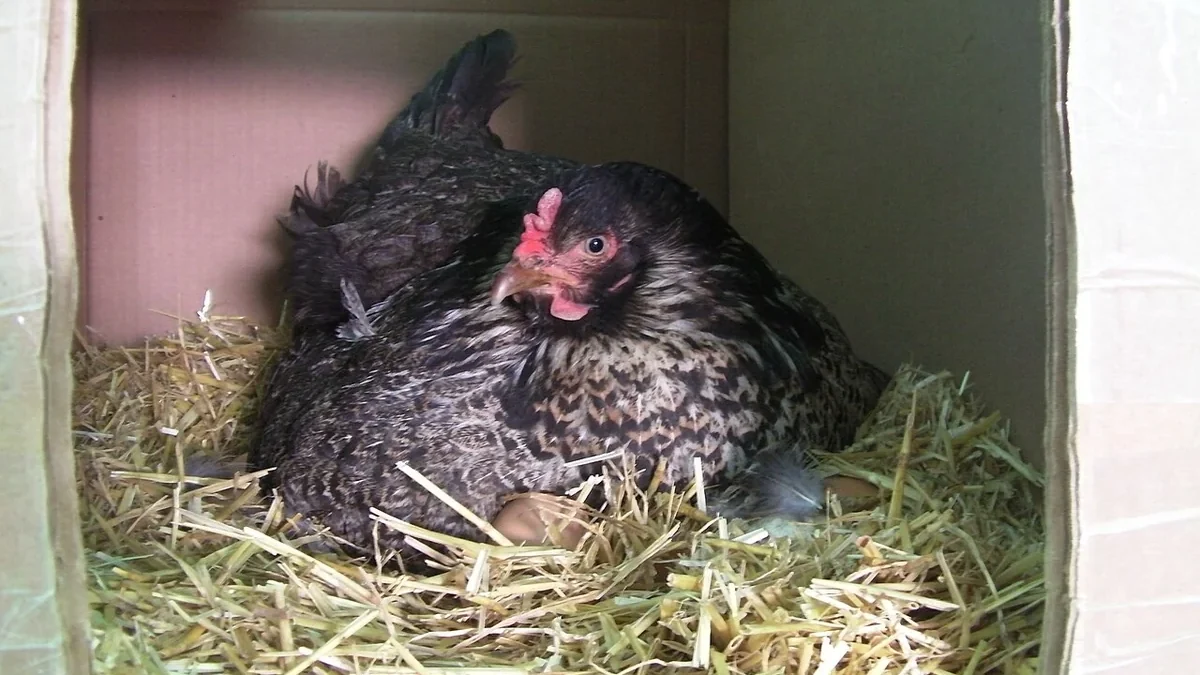

Broodiness is not the same as any quiet behavior
A broody hen persistently attends a nest and may show behavior associated with incubating eggs. However, a withdrawn bird, poor appetite or unusual activity can also indicate a health problem. Observe the actual pattern and the bird’s condition. Use appropriate poultry or veterinary advice when the cause is uncertain or concerning.
Hens can lay without a rooster. Fertile eggs and hatching are separate questions. Broodiness does not by itself establish that eggs are fertile or that the household can appropriately care for the resulting birds.
Choose the response from your flock goal
| Goal | Questions to resolve |
|---|---|
| No chicks planned | What suitable management supports the hen’s welfare without allowing an unwanted hatch? |
| Chicks planned | Are eggs suitable, and are housing, feed and care ready? |
| Cause uncertain | Does the pattern fit nesting behavior, or is a health review needed? |
| Capacity limited | Where would young birds and any males be kept or appropriately rehomed? |
Avoid a universal intervention or treatment based on a short description. Welfare and the individual bird’s condition remain central.
Plan the next life stage before hatching
A household considering a hatch has room for its existing flock but no suitable growing area for chicks or plan for males. It resolves those needs before choosing to hatch, rather than letting a nest decision create a capacity problem several weeks later.
Record the breeding goal, source information, expected care stages and responsible caregiver. A hatch produces ongoing obligations, not only an interesting event.
Keep observation and support available
Provide the appropriate feed, water and conditions, and monitor the bird with suitable guidance. Contact an appropriate adviser about concerning changes rather than using herbs, feed restriction or another unsupported internet remedy.
Read roosters and fertile eggs, brooding chicks and flock capacity. Choose a response that protects the bird and the household’s ability to care for the next stage.
Does a nest decision automatically mean you should hatch eggs?
No. First establish whether chicks are wanted and whether suitable housing, feeding, care and a destination for every future bird are ready. A flock at its care limit should not expand simply because a hen attends a nest. Health and welfare still need observation.
Sources & further reading
Official guidance and original source material used for the factual points in this guide. Planning examples and worksheets are our own illustrations.
- University of Minnesota Extension: Raising layer chicks and pullets
- Cooperative Extension: Raising Chickens for Egg Production
- Penn State Extension: What Do I Do with All These Eggs?
- Cooperative Extension: Normal Behaviors of Chickens in Small and Backyard Poultry Flocks
- CDC: Backyard Poultry — Healthy Pets, Healthy People
Checked 8 October 2026. Location-specific rules, availability and product specifications can change. Suggest a correction.