
Sources checked

Start with the flock and local conditions
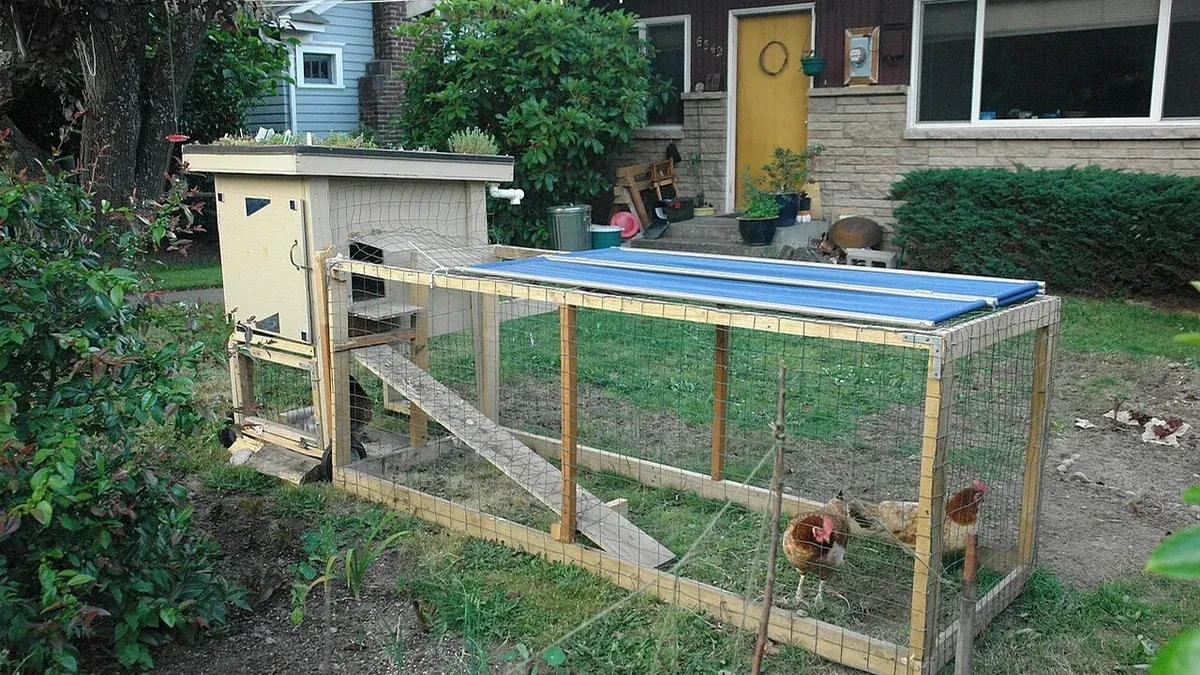
Write the planned number, breed size, life stage and ordinary management arrangement. Confirm local placement and permission requirements. Use appropriate husbandry guidance for space, ventilation and climate, then draw the coop and run with the actual dimensions. A decorative plan may not provide adequate care or cleaning access.
Choose the location for drainage, dependable water, daily observation and predator protection. Include the route used to carry feed, remove litter and collect eggs. Decide how care will work in rain, heat or cold before treating a convenient sunny-day location as sufficient.
A construction brief
| Element | Design question |
|---|---|
| Floor and bedding | Can the area remain dry and be cleaned appropriately? |
| Ventilation | Can stale air and moisture leave without unsuitable drafts? |
| Roosts and nests | Do the arrangement and access suit the flock? |
| Openings | Are doors, gaps, mesh and fastenings suitable for local predators? |
| Run | Can birds use it with drainage, shelter and secure boundaries? |
| Human access | Can every area be inspected and serviced? |
| Feed and water | Can they be maintained without repeated spills or difficult carrying? |
Use appropriate structural and installation help where needed. A small building still needs suitable supports, weather resistance and safe equipment.
Review the drawing before building
A keeper draws the cleaning route and finds that the nest structure blocks access to a rear corner. Moving the nests or changing the service opening before construction prevents a recurring difficult chore. The design is assessed by the daily task, not only the outside appearance.
Check hardware, door operation, equipment positions and ventilation paths while the structure is still easy to revise. Keep suitable predator protection and local requirements central when choosing materials.
Commission and maintain the complete arrangement
Inspect openings, latches, drainage, accessible water and the ability to observe every bird. Have feed and cleaning routines ready before introducing the flock. The CDC and APHIS sources explain hygiene and biosecurity practices to incorporate into the care route.
Read nesting-box choices, garden integration and space arithmetic. A useful coop supports healthy birds and tasks that the household can maintain.
Sources & further reading
Official guidance and original source material used for the factual points in this guide. Planning examples and worksheets are our own illustrations.
- University of Minnesota Extension: Raising chickens for eggs
- USDA APHIS: Defend the Flock — Biosecurity Basics
- CDC: Backyard Poultry — Healthy Pets, Healthy People
- University of Maryland Extension: Growing Vegetables in Raised Beds
- University of Minnesota Extension: Raising layer chicks and pullets
- USDA APHIS: Defend the Flock
Checked 8 October 2026. Location-specific rules, availability and product specifications can change. Suggest a correction.