
Sources checked
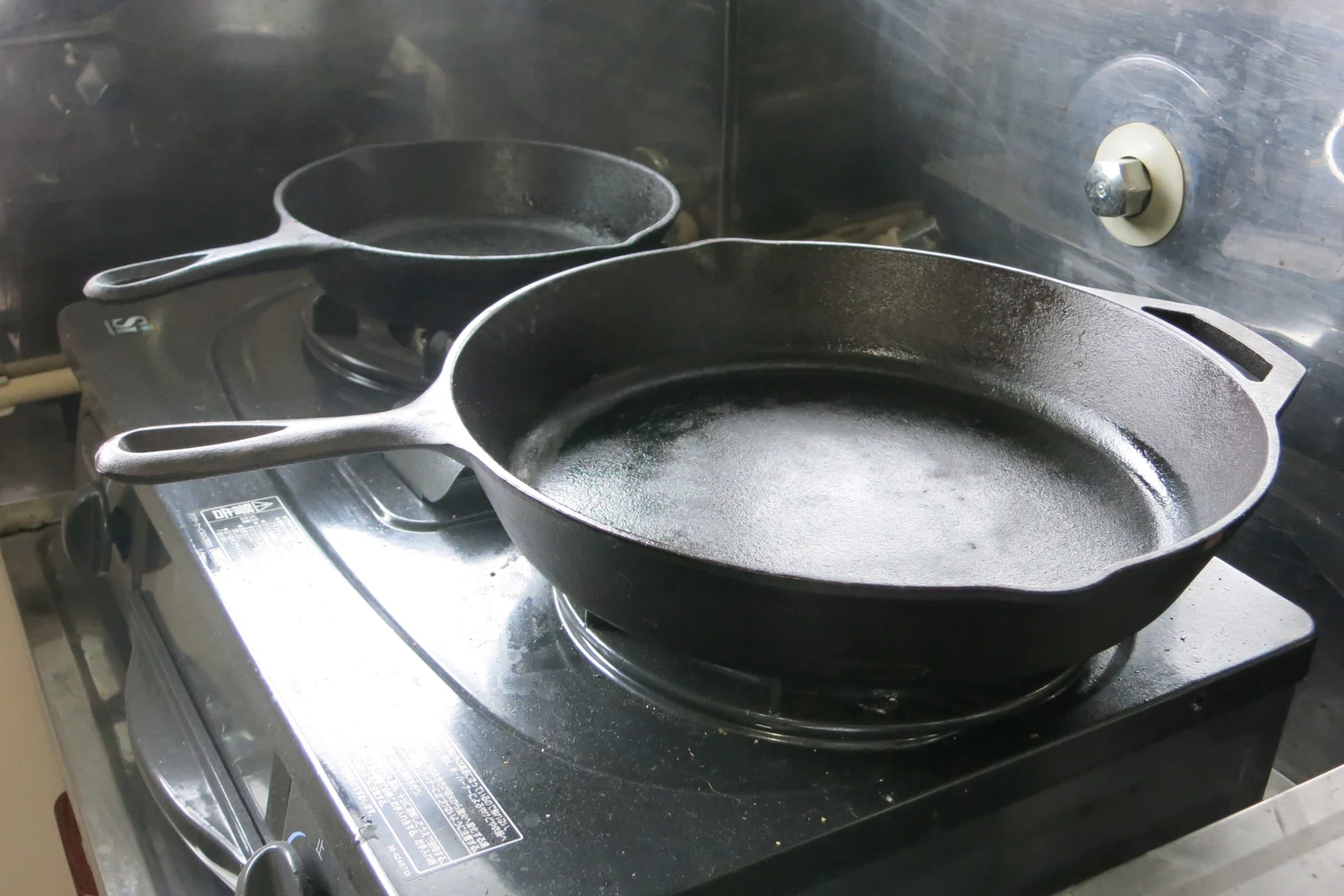

Start With The Pan You Actually Have
Check whether your cookware is bare cast iron or coated with enamel. This guide covers bare iron. Follow the maker’s instructions for enamel, lids, handles and any other attached materials. A used pan also needs inspection: look for cracks, loose attachments and damage that would make handling it unreliable. A shiny photograph is not evidence of a sound cooking surface.
A practical small-kitchen choice is a pan you can comfortably lift, wash and store, with a base that fits the appliance. Try that movement before buying several sizes. Keep its manual with the model information so the oven limits and cleaning instructions are easy to find.
What Seasoning Does
Seasoning is a layer of oil bonded to the iron by heating. It protects the surface and helps food release; it is not a layer of old food that needs to be preserved. Many new pans arrive seasoned. An uneven-looking surface on a new pan does not automatically require starting over. Check the maker’s advice and how the pan behaves during ordinary cooking.
After washing, dry the pan thoroughly and apply only a very light film of cooking oil. Pooling oil can leave a sticky finish. Keep moisture out of storage, especially if a small cabinet encourages stacking damp cookware. A dry separator can protect nested pans without adding another rack to the kitchen.
A Manufacturer’s Oven Method
Lodge’s current method for its bare iron is to wash and fully dry the pan, wipe a very thin oil coating over the inside and outside, then bake it upside down for one hour at 450–500°F. Turn the oven off and let the cookware cool inside. These are Lodge’s instructions, not a universal temperature for every pan or handle. Confirm your own product’s limits and provide the ventilation its instructions require.
Do this when you have time to let the pan cool safely. Clear a landing place before handling it, use suitable protection and keep other people from mistaking a hot pan for a cool one. Routine care is usually easier than repeatedly stripping and rebuilding the finish.
Troubleshoot Before Replacing It
| What You Notice | What To Check | A Useful Response |
|---|---|---|
| Sticky surface | Excess oil or incomplete curing | Clean the surface and consult the maker’s reseasoning method. |
| Food sticking | Heat, oil and when food is moved | Adjust cooking technique before assuming the finish is ruined. |
| Rust after storage | Residual moisture and the storage space | Address the wet-storage problem, then follow the maker’s restoration guidance. |
| A damaged or uncertain used pan | Structural condition and unknown materials | Ask the manufacturer before attempting an elaborate restoration. |
Change one part of the routine at a time and note the result. This is more useful than buying several special products without identifying why the problem keeps returning.
Make Care Fit Your Kitchen
Give the pan a reliable drying spot, a place for the small amount of oil you use and a storage location that does not require lifting it over your head. Include the weight of a full pan when testing the routine. If the sink is awkward or the oven cannot accommodate the pan, choose cookware that supports your actual kitchen rather than designing the room around a collection.
Before your next meal, check that the pan is dry, the cooking surface is clear and the lid or trivet is within reach. A short, repeatable routine is the useful result.
Sources & further reading
Official guidance and original source material used for the factual points in this guide. Planning examples and worksheets are our own illustrations.
Checked 8 October 2026. Location-specific rules, availability and product specifications can change. Suggest a correction.