
Sources checked
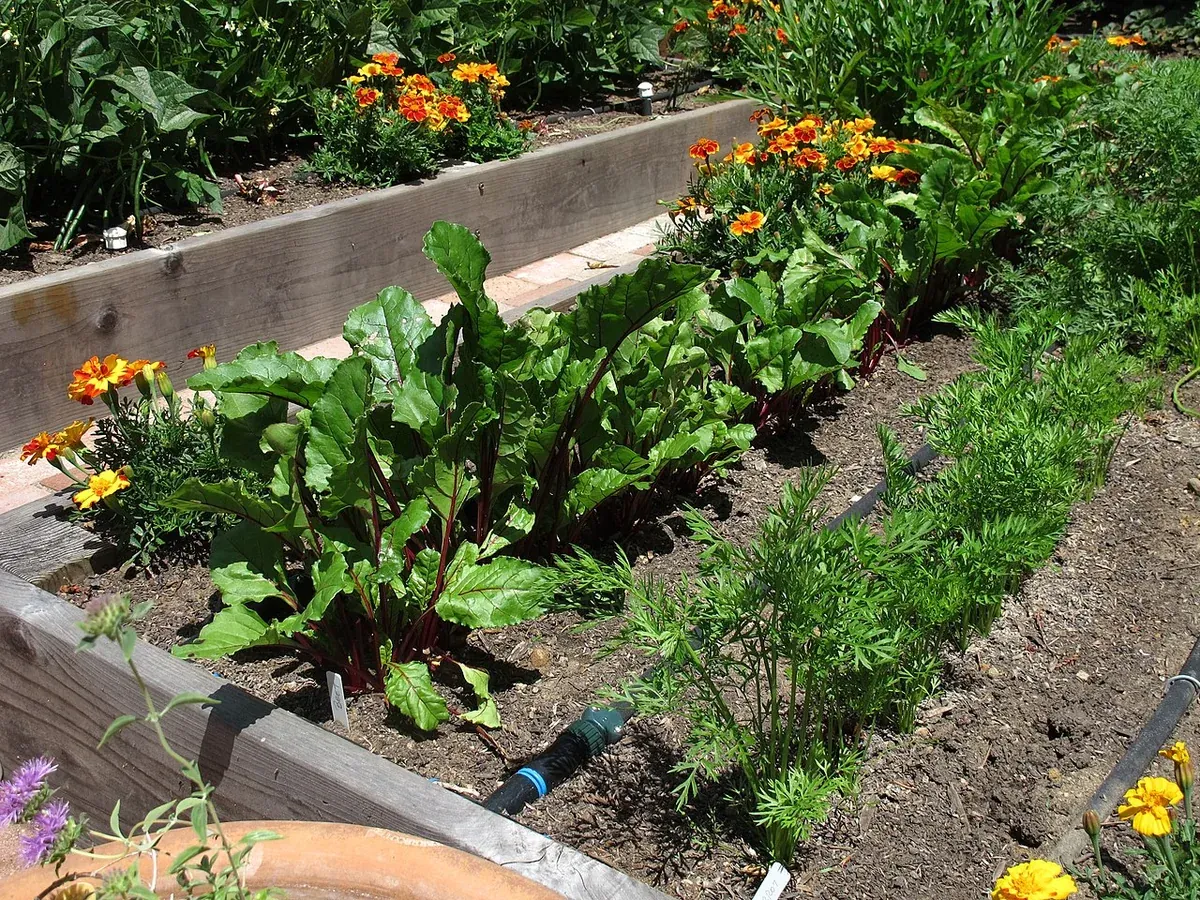

A low-cost frame is only one part of a bed
Raised-bed cost includes the frame or edge, growing material, water access, paths and the work needed to maintain it. Compare the complete setup before choosing a design. A small useful bed can be more valuable than several cheap frames that you cannot fill, water or reach comfortably.
Establish material suitability, particularly for reused items with unknown treatment or contamination. Do not assume every pallet, industrial container or old timber is suitable for food growing. Choose locally appropriate soil and amendment guidance rather than filling a bed with a universal recipe.
Compare the choices
| Approach | Potential advantage | Check |
|---|---|---|
| Simple ground-level bed | Less purchased structure | Existing soil suitability and drainage |
| Timber frame | Defined edge and workable size | Material suitability, life and fastening |
| Other suitable rigid frame | A stable reusable boundary | Condition, sharp edges and heat effects |
| Containers | A small movable starting scope | Volume, drainage and watering frequency |
| Phased build | Spending matched to experience | A realistic expansion and water plan |
Include paths in the total footprint. Reach and tool access can affect how much work the bed creates.
Calculate before ordering fill
A 2 m by 1 m bed filled to 0.3 m has a geometric volume of 0.6 cubic metres, or 600 litres. At 40 litres per bag, that is 15 bags before any supplier-specific settling or fill allowance. This is volume arithmetic, not a universal soil recipe.
Use the soil-volume calculator for the actual dimensions. Ask the supplier what material and quantity suit the planned growing method.
Budget for the first season
Record materials, fill, suitable amendments, plants or seeds and watering needs. Add transport and any tools you do not already have. Avoid buying an entire installation before checking that the location and routine work.
Review after one season and expand only where harvest and maintenance fit. Read keyhole gardens for a different access concept and soil preparation for the growing conditions that matter beyond the frame.
Sources & further reading
Official guidance and original source material used for the factual points in this guide. Planning examples and worksheets are our own illustrations.
- University of Maryland Extension: Growing Vegetables in Raised Beds
- University of Maryland Extension: How to Make Compost at Home
- University of Maryland Extension: Soil Testing and Soil Testing Labs
- University of Maryland Extension: Growing Vegetables in Containers and Salad Tables
- University of Maryland Extension: Organic Matter and Soil Amendments
- University of Maryland Extension: Fertilizing Vegetable Gardens
Checked 8 October 2026. Location-specific rules, availability and product specifications can change. Suggest a correction.