
Sources checked
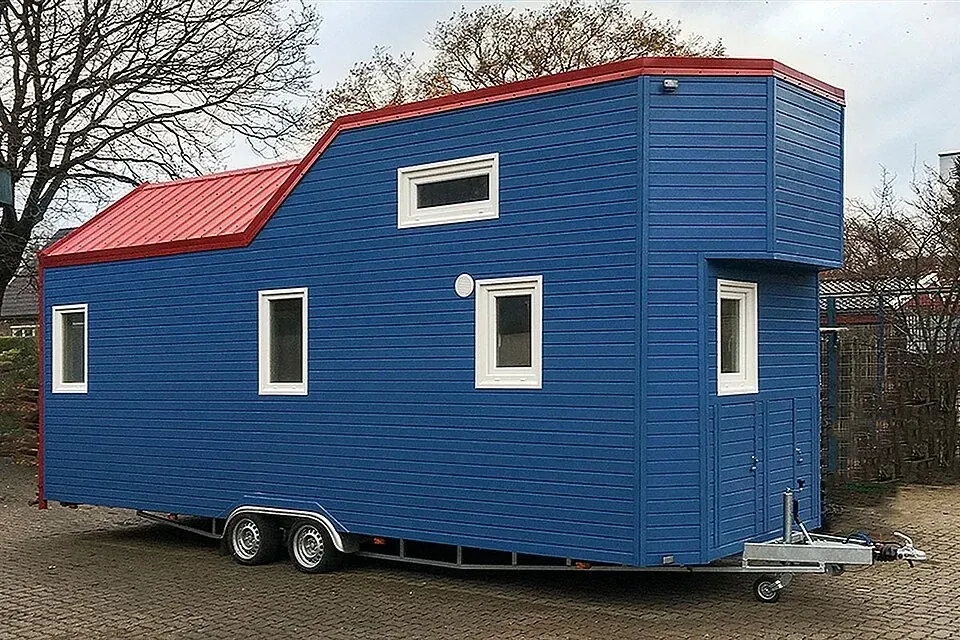

Start with the measured home and exact vehicle
Obtain the home’s measured loaded weight and overall moving dimensions before selecting a truck or requesting transport quotes. Include fixed projections and the actual transport configuration. Match the precise vehicle, engine, drivetrain, hitch, payload and manufacturer towing documentation; a headline maximum for a model range is not the rating for every truck in that range.
Check vehicle payload as well as trailer and combination limits. Passengers, tools and hitch load use vehicle capacity. Trailer axle, tire, brake and coupling limits can create a separate constraint. If the combination requires specialist transport, get a quote from an appropriately equipped operator before finalizing the house or site.
Separate the questions that must be answered
| Check | Evidence | Who can resolve it |
|---|---|---|
| Mass and loading | Scale readings and rating plates | Manufacturer and transport professional |
| Vehicle compatibility | Configuration-specific manual and hitch documentation | Vehicle / hitch manufacturer |
| Route permission | Actual dimensions, mass and route | Relevant road authority or permit provider |
| Clearance and turning | Measured obstacles and final approach | Transporter and site team |
| Placement | Support, lifting or positioning plan | Installation team and designer |
A permit for one transport route does not give permission to live at the destination. Keep the site approval discussion separate so an expensive delivery does not arrive at an unusable location.
Walk the final approach before move day
Check gate width, overhead wires, branches, sharp turns, steep transitions, bridges, soft ground and the space available to turn or reverse. Ask the transporter to evaluate uncertainties rather than assuming an online map captures them. Arrange any tree work, temporary access, ground protection or lifting before scheduling the move.
A home can travel the main road yet fail at a narrow driveway turn. Compare a wider temporary entrance, a different delivery direction and specialist positioning equipment. Add the chosen access and placement work to the move quote; the road journey is only part of delivery.
Prepare the house and handover
Follow the home, chassis and equipment manufacturers’ preparation instructions. Secure contents, check doors and windows, isolate systems as specified and document the condition with dated photographs. Plan communication, weather decisions, site readiness, responsible contacts and the handover inspection.
After placement, inspect for transport damage and have the relevant team complete leveling, support, connections and commissioning. Keep written responsibilities for damage, delays and access assumptions in the contract. For an occasional relocation, hiring specialist transport can be worth comparing with the purchase and ownership costs of a suitable vehicle.
Sources & further reading
Official guidance and original source material used for the factual points in this guide. Planning examples and worksheets are our own illustrations.
- Federal Highway Administration: commercial motor vehicle size regulations — Commercial-vehicle National Network context; check the rules applicable to your vehicle and route.
- NHTSA TireWise: tire selection, loading and maintenance
Checked 8 October 2026. Location-specific rules, availability and product specifications can change. Suggest a correction.