
Sources checked
.JPG)
Begin with the herbs you use
A useful herb garden begins with meals, not a large collection of plants. List the herbs you buy most often and choose a few that fit local conditions. Put them where harvesting is convenient, with suitable light and water access. Containers can keep a small garden close to a kitchen door, but they need drainage, adequate roots and more frequent moisture checks than many ground beds.
Decide whether the garden is for fresh leaves, drying, edible flowers or seed. The harvest goal affects spacing and whether you allow flowering. Do not treat culinary herbs as medical treatments, and avoid putting unidentified plants into food or tea.
Group plants by practical needs
| Group | Examples to assess locally | Design issue |
|---|---|---|
| Drier, well-drained conditions | Rosemary, thyme and oregano | Avoid persistently wet roots; check winter adaptation. |
| More regular moisture | Basil and parsley | Provide suitable water without saturating the growing medium. |
| Cool-season culinary harvest | Cilantro and other locally recommended leafy herbs | Use a suitable season and repeated small sowings where useful. |
| Vigorous spreaders | Mint | A separate manageable container can reduce unwanted spread. |
| Herbs allowed to flower | Dill, cilantro and basil | Reserve room and recognize the change in leaf-harvest quality. |
These are planning groups, not identical watering prescriptions. Variety, root volume, soil and weather still matter.
Choose a layout you can maintain
For a small patio, use several containers rather than forcing every herb into one pot. Separate plants whose moisture requirements differ. Arrange pots so that all can receive useful light and be reached with a watering can. Select container sizes for mature plants, not their nursery-pot appearance. Check drainage openings and prevent pots from sitting in water.
For a bed, place frequently picked herbs along an accessible edge and keep taller growth from hiding smaller plants. A raised bed or herb spiral can offer different positions, but it also changes drying patterns. Choose such a structure only if it solves a real access or drainage problem.
An everyday-cooking example
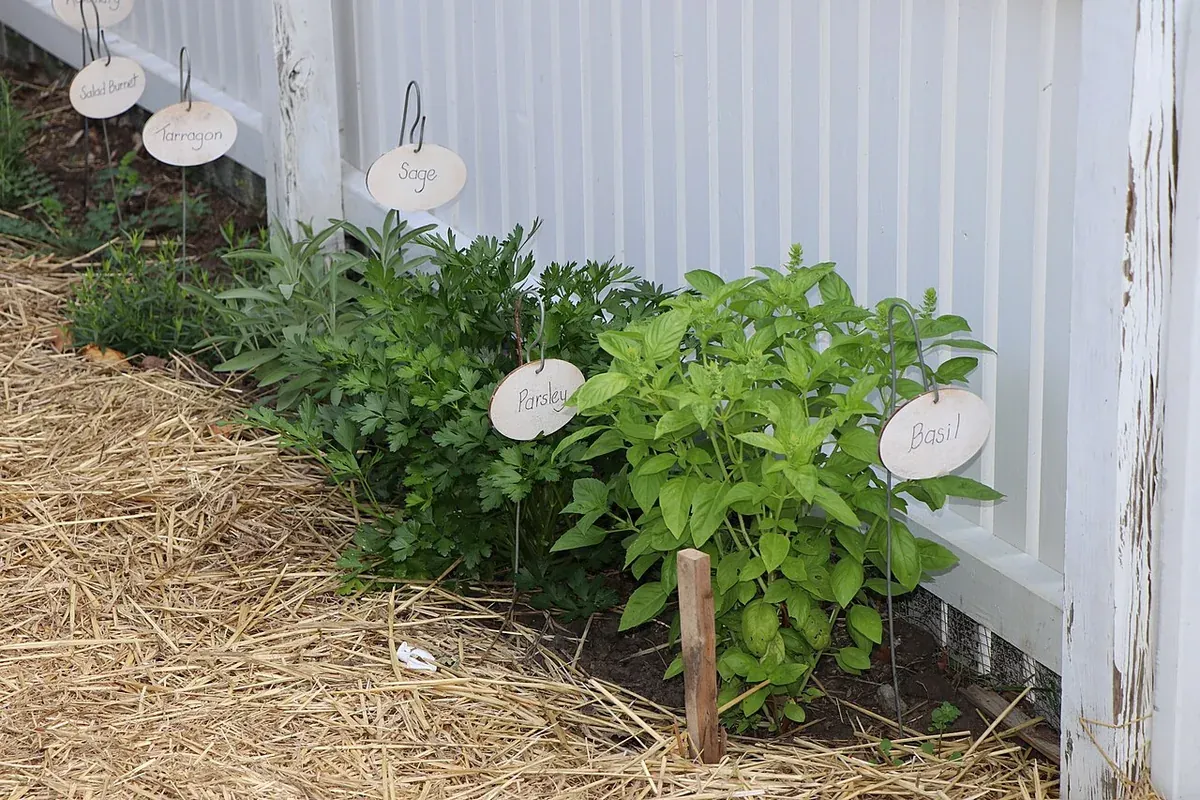
Imagine a cook who regularly uses basil, parsley, thyme and mint. Give basil and parsley suitable individual containers with a practical watering routine, put thyme in a well-drained container and keep mint separate. Label each plant and note its expected mature size. Place them near the route to the kitchen without blocking a door or walkway.
After several weeks, record which plants are actually harvested. Replace or relocate a neglected plant before buying more varieties. For cilantro, use locally appropriate cool-season timing rather than expecting a single plant to provide leaves indefinitely through heat.
Establish and harvest for continued use
Buy healthy plants or start seed according to the herb’s requirements. Some herbs are straightforward from seed; others are easier from transplants or division. Harden indoor starts and avoid exposing tender basil to unsuitable cold. Water the root ball during establishment and use fertilizer according to the medium and crop needs rather than applying a heavy feed to every pot.
- Check container moisture and drainage frequently.
- Harvest with clean tools and avoid removing all functional foliage at once.
- Identify insects before treating edible leaves.
- Read any pesticide label for the specific crop and harvest interval.
- Keep mulch away from stems.
- Plan winter protection or indoor conditions for tender perennials.
Keep food handling separate from animal care
Herb containers near a poultry run are not automatically safe food containers. Keep manure, dirty water and animal equipment away from edible harvest areas. Wash hands before handling food plants after caring for animals. Do not add herbs to chicken feed as a promised worm treatment, disease prevention or replacement for a complete ration. Culinary gardening and animal medication are different decisions.
One practical next step
Keep a small harvest note for each herb: when you pick it, whether you use it and whether its container stays evenly moist. Relocate a difficult pot before replacing the plant repeatedly. Those observations help you choose the next herb and prevent a convenient kitchen garden from becoming a collection of neglected containers.
Herb questions and mistakes
Can all herbs share one pot? Only when their growth and watering needs fit and adequate space remains. Why is my herb growing lots of weak leaves? Check light, watering and excessive fertility. Can rosemary overwinter outdoors? It depends on variety and climate; consult local guidance. What is a common first mistake? Buying too many herbs before establishing a reliable watering and harvesting routine.
Sources & further reading
Official guidance and original source material used for the factual points in this guide. Planning examples and worksheets are our own illustrations.
- University of Maryland Extension: Care of Herbs and Starting Herbs from Seed
- University of Maryland Extension: Growing Vegetables in Containers and Salad Tables
- University of Maryland Extension: Vegetable Succession and Companion Planting
Checked 8 October 2026. Location-specific rules, availability and product specifications can change. Suggest a correction.