
Sources checked
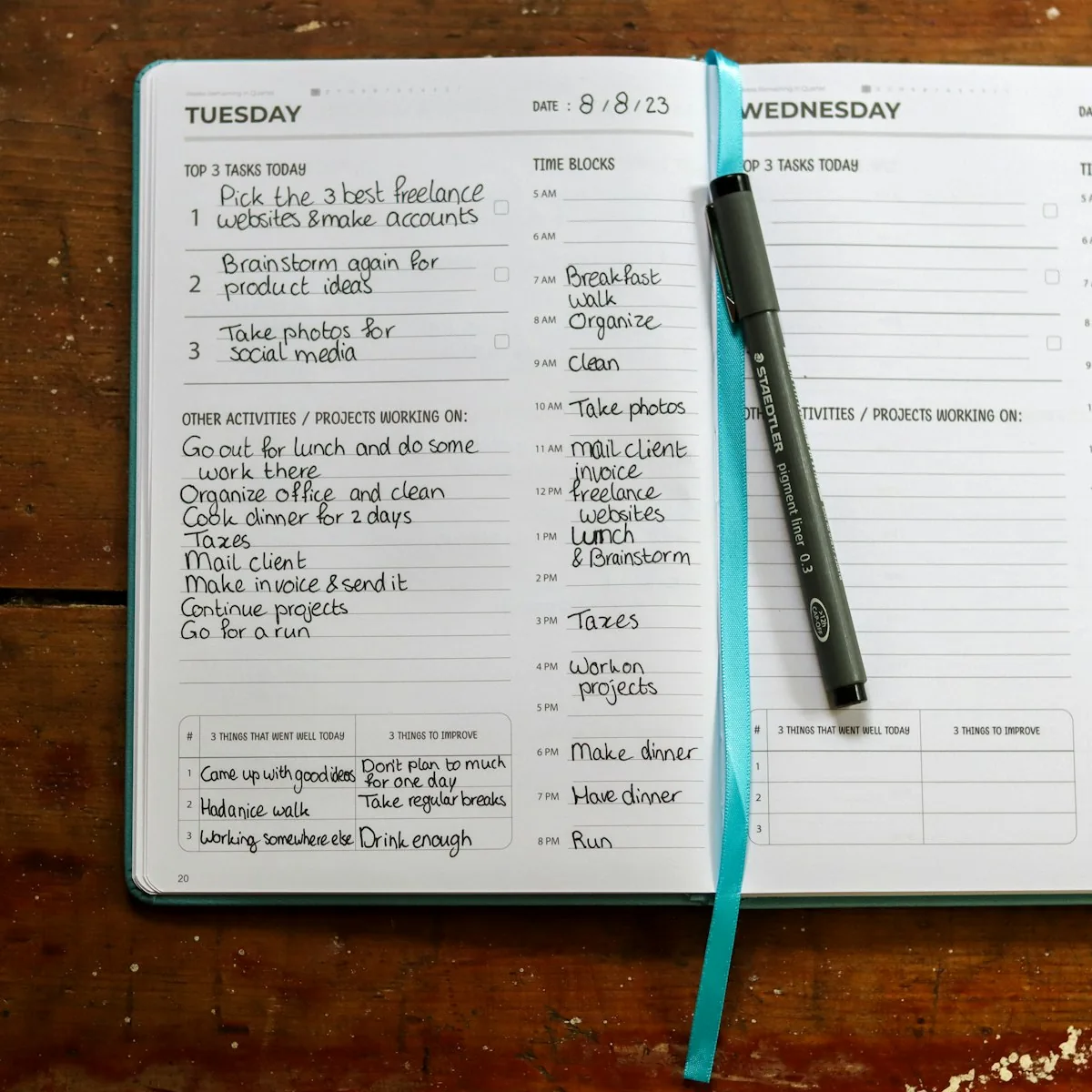
Map what the week actually requires
Record work, care, travel, meals, household tasks, rest and the time needed to start or finish each activity. A calendar full of appointment blocks can hide the transitions around them. Use an ordinary week rather than an ideal one, and include tasks performed by other household members.
Mark fixed responsibilities, tasks with flexible timing and optional commitments separately. A care need or required shift cannot always be removed. The first useful change may be sharing a task, reducing its scope or arranging a better transition rather than saying no to everything.
A schedule review worksheet
| Activity | Hidden time | Possible change |
|---|---|---|
| Appointment | Travel, waiting and preparation | Combine nearby tasks when appropriate |
| Household chore | Finding equipment and cleanup | Keep tools accessible and reduce setup |
| Optional commitment | Travel and follow-up work | Review frequency or scope |
| Meal routine | Shopping, preparation and dishes | Choose a manageable repeat option |
| Work transition | Required messages and equipment setup | Agree on a clear boundary where feasible |
Record who is affected before changing a shared responsibility. A simpler calendar for one person can create more work for someone else.
Use time arithmetic honestly
A weekly activity appears to take one hour but also requires thirty minutes of travel and thirty minutes of preparation. Its complete demand is two hours. Reducing it from weekly to twice monthly frees about four hours in a four-week scenario, if the change is appropriate and the time is not immediately filled elsewhere.
Choose one change and protect the intended result. Keep necessary care and rest visible instead of treating them as leftover time.
Build an ordinary-interruption version
Plan a smaller version of tasks that can flex, such as a shorter household reset or a simpler meal. Decide which commitments can move and which cannot. Leave enough room for the interruptions that recur in your life.
Review the schedule after actual use. If the essential workload is still unrealistic, the next step may require support, different work arrangements or a changed scope. Read the work downshifting guide when a larger change is being considered.
Sources & further reading
Official guidance and original source material used for the factual points in this guide. Planning examples and worksheets are our own illustrations.
Checked 8 October 2026. Location-specific rules, availability and product specifications can change. Suggest a correction.