
Sources checked
Understand the method from its creator
Marie Kondo’s official guidance organizes tidying around categories rather than individual rooms. Its published sequence moves through clothing, books, papers, miscellaneous items and sentimental possessions. The selection question centers on what brings personal joy. The linked official page explains the six principles and their context.
Our practical suggestions below are adaptations for a manageable household project, not a claim of certification or a guarantee of a permanent transformation. Keep necessary functional items and legal or health-related records appropriately, even when an emotional selection question is not the only useful test.
Plan a category you can handle
| Category | Preparation | Practical consideration |
|---|---|---|
| Clothing | Allow a place to compare and try items | Current fit, work, climate and laundry |
| Books | Gather the chosen scope | Current use, meaning and realistic shelving |
| Papers | Separate by record type | Retention requirements and secure disposal |
| Miscellaneous | Use bounded subcategories | Tools, supplies and essential backups differ |
| Sentimental | Leave adequate time and storage | Meaning does not depend on daily use |
If gathering an entire category would disable the household or exceed your physical capacity, use a clearly bounded subcategory and recognize that this changes the original process.
Complete selection before shopping for storage
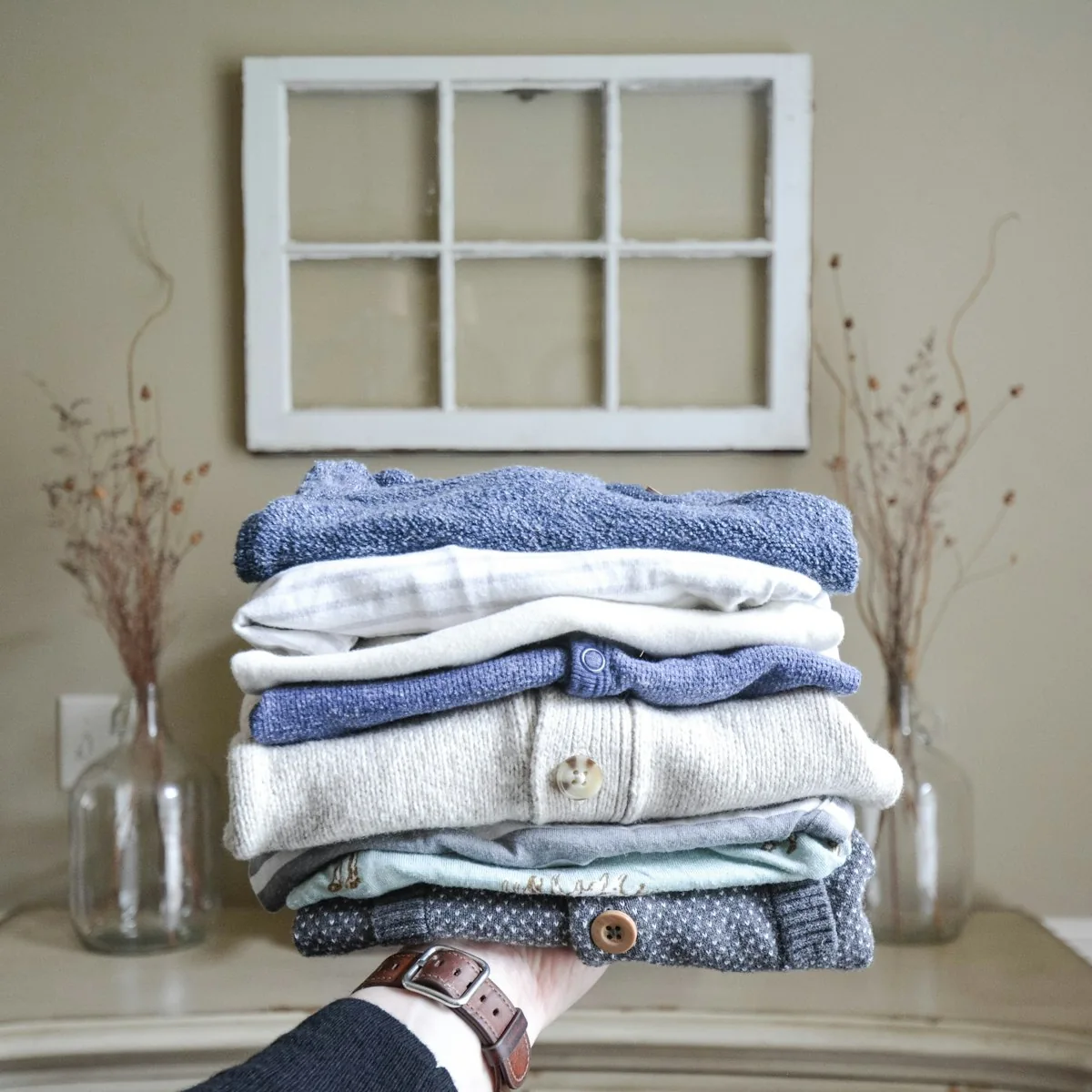
Someone gathers everyday clothing, assesses fit and use, and chooses a workable set. Only afterward do they determine whether the existing wardrobe needs a better arrangement. Buying matching storage before deciding what remains could preserve the same problem in new containers.
Choose suitable outgoing routes and schedule them. Keep other household members involved in their own possessions and shared categories.
Give the retained items a useful home
Storage should allow ordinary use and easy return. Rehearse a busy morning or laundry cycle, and revise a setup that requires unnecessary moving or folding work. The published method’s emphasis is personal, so avoid imposing another person’s ideal room on the household.
Read books, paperwork and clothing for category-specific decisions. Use the official source for the original method and practical household evidence to judge your adaptation.
Is KonMari identical to owning as little as possible?
The creator’s selection approach centers on personal joy and a chosen lifestyle, not a universal minimum item count. Preserve necessary functions and respect other people’s decisions. Use the original guidance for the method and observe whether your practical adaptation supports daily use.
Sources & further reading
Official guidance and original source material used for the factual points in this guide. Planning examples and worksheets are our own illustrations.
- Marie Kondo: About the KonMari Method
- The Minimalists: 90/90 Minimalism Rule
- The Minimalists: Getting Rid of Just-in-Case Items
- EPA: Household Hazardous Waste
- IRS: How Long Should I Keep Records?
- FTC: Creating Strong Passwords and Other Ways to Protect Your Accounts
Checked 8 October 2026. Location-specific rules, availability and product specifications can change. Suggest a correction.