
Sources checked
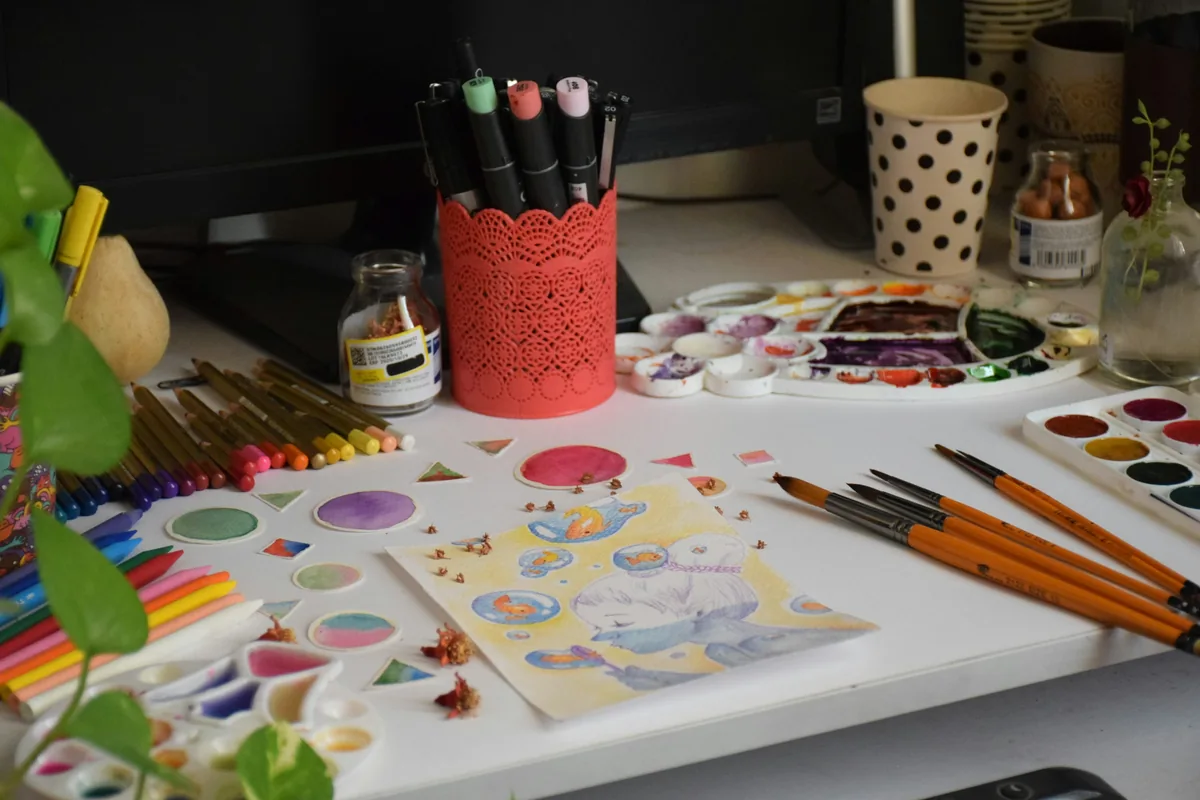
Choose the activity before the equipment
A small home can support a wide range of hobbies when their practical needs are understood. Start with what you want to do: make something, learn a skill, spend time outdoors, connect with others, or enjoy a quiet activity. The hobby does not need to become productive or earn money to justify its place.
Try a borrowed kit, an introductory class, or a small existing set of supplies when available. Enjoying videos about a hobby is different from enjoying its ordinary practice, cleanup, and maintenance. Test that experience before committing storage and money.
Compare the complete space requirement
| Hobby | Compact starting approach | Hidden demand to check |
|---|---|---|
| Drawing or journaling | A small pad and a few tools. | Comfortable lighting and a usable surface. |
| Hand sewing or embroidery | One current project in a pouch. | Materials accumulating beyond the active project. |
| Reading | Books you own or accessible borrowing. | Loan deadlines, device access, and shelf space. |
| Photography | Try the camera you already have. | Image storage, editing time, and accessories. |
| Music practice | A suitable instrument and agreed practice times. | Noise, neighbors, storage, and maintenance. |
| Board or card games | A small selection suited to available players. | Table size and pieces left between sessions. |
| Container gardening | A suitable plant in an appropriate location. | Light, water, drainage, and care during travel. |
The cheapest or smallest option is not always the most accessible. Comfort, vision, dexterity, concentration, and reliable access may change what works.
Write a one-session plan
Describe where you will practice, how long setup takes, what remains out while you work, and where everything goes afterward. In a home with one table, include a stopping point before the table is needed for meals or work.
For example, an embroidery project can use a portable tray for active tools and a labeled bag for the fabric. If spreading materials and finding the correct pieces takes most of the available time, reduce the active selection or change storage. For photography, organize images as part of the session rather than postponing thousands of files until later.
Set a storage boundary that serves the hobby
Choose a shelf, box, drawer, or other appropriate space based on the activity. Distinguish tools you use repeatedly from consumables and unfinished projects. Label each active project with its next action and the supplies it needs.
A one-project-at-a-time approach can help when space is very limited, but it is optional. Several projects may be reasonable when they fit and you enjoy switching between them. Review unfinished work periodically and decide to continue, adapt, pass it on, or stop. Stopping a project does not make the time spent learning worthless.
Consider shared or outside space
Libraries, community workshops, clubs, and local classes may provide room or equipment unavailable at home. Check fees, booking, access, transport, storage, and supervision requirements before depending on them. Borrowing saves home storage only when equipment is reliably available when needed.
For activities involving heat, dust, sharp tools, chemicals, or noise, follow the equipment and material instructions and use an appropriate setting. Compactness does not establish that a craft or workshop process is safe inside a small living area. Keep a clear route through the home and avoid leaving hazardous materials beside food preparation.
Buying checklist and FAQs
- Have I tried the ordinary activity?
- Does the equipment fit during use as well as storage?
- Can I afford consumables and maintenance?
- Have shared-space needs been agreed?
- Where will the current project live?
Must a minimalist have only digital hobbies? No. Physical tools and collections can be appropriate when they support an activity you value.
Can I keep an unused hobby kit? Decide whether there is a realistic next session and whether keeping it is worth the space. Do not use a short non-use rule automatically.
What if I like collecting? Set a considered storage and spending plan, and enjoy the collection within those limits.
Sources & further reading
Official guidance and original source material used for the factual points in this guide. Planning examples and worksheets are our own illustrations.
Checked 8 October 2026. Location-specific rules, availability and product specifications can change. Suggest a correction.