
Sources checked
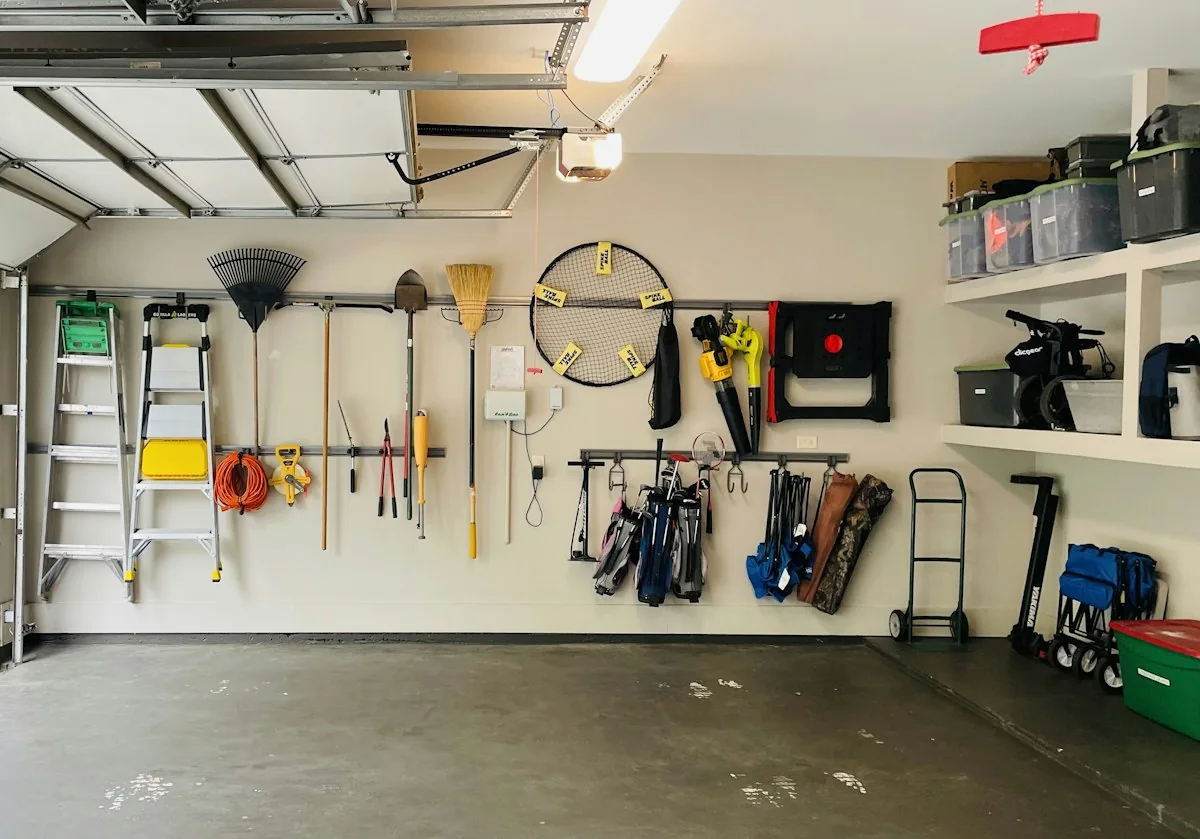
Make access the first objective
Start with the routes and activities the garage must support: parking, equipment, work, household entry and service access. Work in a bounded section so the area remains usable. Keep stored items away from exits and equipment that needs clearance. A garage that looks organized can still be awkward if every task requires moving several containers.
Separate tools, seasonal equipment, ordinary storage and potentially hazardous materials. Check labels and local disposal policies for chemicals, paint, fuel, batteries and similar items. Do not combine unknown products or use a generic donation box for them.
A category-to-location plan
| Category | Decision question | Storage priority |
|---|---|---|
| Regular tools | Which tools support actual tasks? | Convenient access and easy return |
| Seasonal gear | Is it suitable and genuinely needed? | Protected, identifiable storage |
| Duplicates or unfinished projects | Is there a realistic use or completion plan? | A defined decision rather than indefinite storage |
| Chemicals and hazardous materials | What do the label and local program require? | Appropriate separation and conditions |
| Shared possessions | Who owns the decision? | Agreed locations and responsibilities |
Heavy items, shelves and suspended equipment need suitable supports and ratings. Do not treat an attractive arrangement as evidence that loading is appropriate.
Use one complete-zone example
A household clears a workbench zone, retains tools used for current tasks and gives them accessible places. Suitable duplicates use a defined resale or donation route. Old chemical products are handled through the local hazardous-waste program. The bench can be used before another zone begins.
Set an honest deadline for unfinished projects and consider parts, work time and space. Selling a low-value item may create more work than a suitable donation, depending on condition and demand.
Preserve the usable arrangement
Label categories using words the household recognizes. Leave enough room to retrieve heavy equipment safely and return tools after a task. Review purchases against the tools and supplies already available.
The EPA’s household-hazardous-waste guidance helps identify materials needing special handling. Use the four-box process for ordinary items and decision questions for uncertain possessions.
Sources & further reading
Official guidance and original source material used for the factual points in this guide. Planning examples and worksheets are our own illustrations.
- FDA: Shelf Life and Expiration Dating of Cosmetics
- FDA: Where and How to Dispose of Unused Medicines
- EPA: Household Hazardous Waste
- FoodSafety.gov: Four Steps to Food Safety
Checked 8 October 2026. Location-specific rules, availability and product specifications can change. Suggest a correction.