
Sources checked

Choose the whole project before the poults
Turkeys need daily care, suitable feed and housing that fits their mature size. Start with the goal: seasonal meat, breeding, exhibition or companionship. Check local keeping and processing rules and identify suitable veterinary support. If producing meat, arrange a humane processing and food-handling plan before purchasing birds rather than discovering the problem at market size.
Turkeys outgrow chick-scale equipment and decorative small coops. Plan the brooder, growing area and final housing as one system. Consider feed cost, severe weather, manure handling and the people who will provide care every day.
Compare commercial and heritage types
| Type | Why people choose it | What changes the plan |
|---|---|---|
| Broad-breasted commercial types | Rapid meat growth and substantial breast yield | Large final size and a clear finishing plan; do not assume natural breeding ability. |
| Heritage varieties | Natural mating and slower-growing small-flock projects | Longer care and feed period; suitability varies by line and purpose. |
| Small breeding or companion group | Long-term interest rather than a single meat batch | Adult social behavior, ongoing housing and a plan for eggs or offspring. |
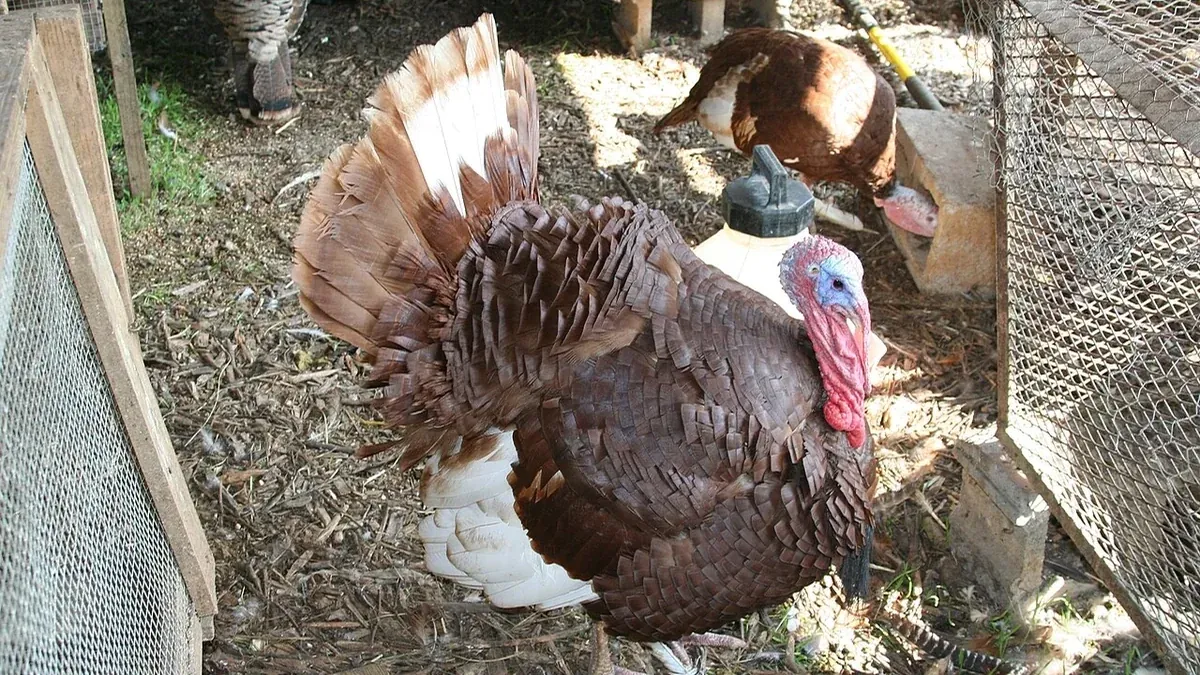
Names commonly encountered among heritage varieties include Bourbon Red, Narragansett, Slate and Royal Palm. Appearance should not substitute for a breeder’s information about health, growth, reproduction and management. “Heritage” does not make a turkey immune to disease.
Prepare a poult brooder carefully
Turkey poults can be more difficult to establish than chicks, so test the brooder before arrival and observe closely during the first days. Provide secure safe heat, a cooler area, clean absorbent bedding, suitable feed and shallow-access drinkers designed for young poultry. Avoid slick flooring and corners where frightened poults can pile up.
Use the supplier’s temperature guidance and measure at poult level; watch distribution and behavior. Confirm that every poult finds feed and water. Do not place open water pans where small poults can fall in, become soaked or chill. Increase feeder, drinker and usable floor access as birds grow.
Feed turkeys as turkeys
Use a complete turkey ration for the birds’ age and intended production. Young turkeys generally need a different nutrient program from chicks; ordinary chicken starter should not be assumed suitable. Follow the turkey feed product and breeder’s transition instructions, and obtain expert help if using a mixed-species system.
Keep feed dry and protected from pests, provide clean water, and observe actual intake. Pasture and treats are extras within a planned nutrition program, not evidence that a complete ration can be removed. Avoid improvised medication, herb cures and supplementation without an identified need.
Build for the final bird and the weather
Choose a dry, ventilated shelter and secure outdoor area with doors that accommodate mature birds. Provide adequate room to move, rest and reach equipment without crowding. Select space allowances using reliable guidance for the variety, final weight, weather and management system; acreage alone cannot determine capacity. Roosting arrangements must suit the birds’ body type and ability to get up and down safely.
Plan cleaning access and drainage around drinkers. Secure mesh, latches and ground edges against local predators. Shade and reliable water are essential during heat. Any heater must be installed safely and must not replace attention to moisture and fresh air.
Manage chicken contact and biosecurity
Blackhead, or histomoniasis, is a particular concern for turkeys. Chickens can contribute to environmental risk through parasites and contaminated ground, so ask a poultry-experienced veterinarian or local Extension specialist about your site before placing turkeys with chickens or on previously used ground. A separate pen beside chickens is not automatically an adequate disease-prevention plan.
Protect feed and water from wildlife, use dedicated equipment and footwear, and plan isolation for incoming birds. Watch appetite, droppings, movement and breathing. Seek prompt help for unusual illness or sudden deaths rather than trying an unsupported home treatment.
A batch-planning example and checklist
For an illustrative three-poult meat project, plan space and equipment for three mature birds from the start. Obtain the breeder’s expected growth range, reserve processing capacity, and price feed for the full period. Include a delay margin if weather, growth or the processor changes the schedule. Starting with three does not mean the same housing would support three adult breeding turkeys indefinitely.
- Complete all housing stages before they are needed.
- Confirm complete feed availability and water reliability.
- Arrange daily care and a backup carer.
- Keep health and growth observations.
- Review local disease risks and processing requirements.
- Use separate food-handling and animal-cleaning equipment.
Turkey questions and mistakes
Can I raise turkeys with chickens? Obtain site-specific disease advice first, especially about blackhead. Can broad-breasted birds breed naturally? Do not plan on it; breeding ability is a key distinction from heritage types. How many fit my land? Evaluate usable housing, outdoor conditions and management rather than one stocking number. What commonly fails? An underprepared brooder, chicken feed used without checking suitability and no plan for the mature birds.
Sources & further reading
Official guidance and original source material used for the factual points in this guide. Planning examples and worksheets are our own illustrations.
- Cooperative Extension: Raising Meat Turkeys in Small or Backyard Flocks
- Cooperative Extension: Selecting a Turkey Variety for Small or Backyard Poultry Flocks
- Cooperative Extension: Blackhead in Poultry
- USDA APHIS: Defend the Flock — Biosecurity Basics
- CDC: Backyard Poultry — Healthy Pets, Healthy People
Checked 8 October 2026. Location-specific rules, availability and product specifications can change. Suggest a correction.