
Sources checked
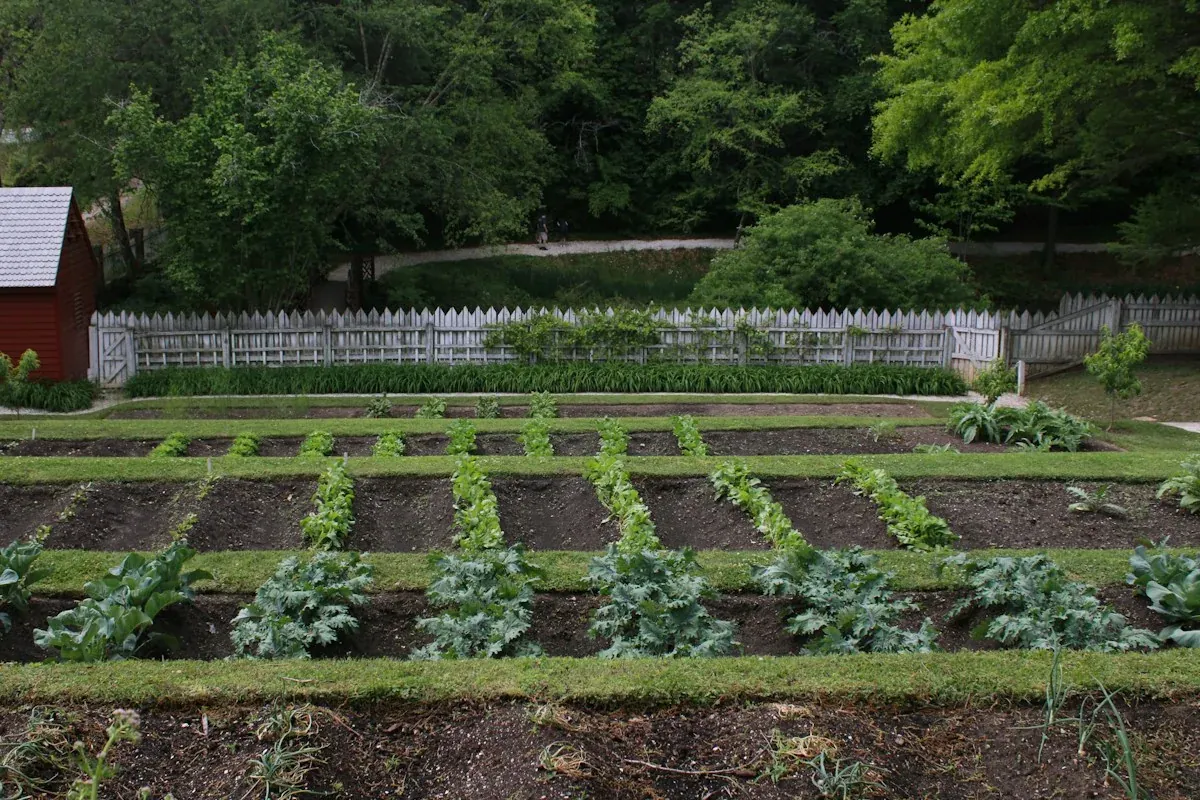
Small sites reward a clear priority
On a small parcel, the existing home, parking, legal access, and service areas may already consume much of the land. The useful planning question is which activity fits the remaining suitable space and the household’s routine. A compact garden, limited perennial planting, and a comfortable open yard can work together; trying to fit every homesteading activity can make each one harder to maintain.
These six concepts assume an existing residence and are paper exercises, not approved plans. Replace the assumptions with a survey, local requirements, actual light observations, and verified water and wastewater information. The same acreage can have very different usable ground.
Keep the arithmetic and the working space separate
Multiply acreage by 43,560 to obtain square feet. One tenth is 4,356; a quarter is 10,890; one third is exactly 14,520. A third-acre example should not silently use 0.3 acres, which is only 13,068 square feet. Measure the parcel shape and the existing features after doing the conversion.
For an illustrative tenth-acre ledger, 2,200 square feet go to the existing home and access, 420 to intensive growing and work, 836 to service or constraint reserve, and 900 to lightly managed open space: 4,356 in total. The 420-square-foot allowance includes the work around the plants; it does not promise 420 square feet of planted beds.
Six concepts with different site assumptions
| Size | Total area | Illustrative priority |
|---|---|---|
| 0.1 acre | 4,356 sq ft | Container-led kitchen growing |
| 1/4 acre | 10,890 sq ft | Compact beds with a separate work court |
| 1/3 acre | 14,520 sq ft | Perennial edge with a central flexible yard |
| 0.4 acre | 17,424 sq ft | Access-first growing spaces |
| 1/2 acre | 21,780 sq ft | Orchard-first decision with a small annual garden |
| 3/4 acre | 32,670 sq ft | Sun-pocket garden and retained canopy |
0.1 acre: container-led kitchen growing. An existing compact home occupies much of a small urban lot; sunny growing space is limited. Keep the entry, bin route, and a small open area; put movable growing containers where they do not block either. First step: Test light and permission with movable containers before making permanent beds. A likely planning error is filling the lot with beds removes the space needed to carry soil, bins, or tools.
1/4 acre: compact beds with a separate work court. A sunny yard with an existing home and a usable tap; soil history still needs checking. Keep a place for compost and tool handling instead of using every sunny square foot for plants. First step: Build one bed and the access around it, then assess a full season of upkeep. A likely planning error is counting bed area while forgetting paths and soil storage.
1/3 acre: perennial edge with a central flexible yard. A true one-third-acre parcel, not a 0.3-acre rounding; existing structures shape the plan. Use the edges for a limited perennial concept while preserving central access and room to change the plan. First step: Verify mature plant dimensions and overhead utilities before choosing permanent plants. A likely planning error is treating 1/3 acre as 0.3 acre or fitting trees by their nursery size.
0.4 acre: access-first growing spaces. A household wants routes that remain useful to people with different mobility needs. Reserve generous measured circulation and reachable work areas; grow fewer things if that keeps the routine comfortable. First step: Lay out temporary paths and test carrying, turning, and reaching before beds are fixed. A likely planning error is narrow paths that fit on paper but become unusable with tools or assisted mobility.
1/2 acre: orchard-first decision with a small annual garden. A sunny suburban lot supports a prospective orchard area, with water availability unverified. Reserve the future canopy zone but plant only after cultivar, spacing, water, and local suitability are checked. First step: Measure mature dimensions and water routes before committing to trees. A likely planning error is planting an attractive grid without budgeting canopy, access, or irrigation.
3/4 acre: sun-pocket garden and retained canopy. Existing mature trees shade part of the yard; the household wishes to retain them. Concentrate annual growing in verified light; keep tree-root and shaded areas lightly managed rather than clearing automatically. First step: Observe sun in the relevant growing season before expanding the sunny core. A likely planning error is treating all acreage as full-sun growing space.
Compare movable growing with permanent planting
Containers offer a reversible way to test light and care routines, but you still need suitable containers, growing medium, water, and a place to handle materials. Beds can organize a fixed growing area, yet paths and edges take real space. Trees make a longer commitment: use locally suitable cultivars and mature dimensions, and account for root and canopy relationships to buildings and utilities.
On an urban site, investigate soil history before a food garden. EPA describes environmental assessment and alternatives such as clean-soil raised beds or containers when contamination concerns exist. Those alternatives still need careful design; placing a new bed over an unknown problem is not a complete contamination assessment.
Test the plan with an ordinary week
Mark a provisional layout with movable objects or temporary lines where safe. Walk from the kitchen to the garden with a basket, from storage with tools, and along the bin or delivery route. Try the route when another household member uses the space. Preserve access to utility and wastewater maintenance locations.
Start one manageable growing area and log watering, upkeep, and food used through the season. Expand only where the observations justify it. For the orchard-led half-acre concept, the first phase is water and mature-plant planning, not filling the proposed orchard grid immediately. For the shaded three-quarter-acre concept, keeping trees may remain the better choice even if it limits annual crops.
Common questions and errors
Can a quarter acre supply all my food? Acreage alone cannot establish that; climate, diet, soil, water, inputs, skill, and time control output. Can I add animals to these drawings? Investigate local rules, species-specific housing, fencing, manure, feed, neighbor impacts, and backup care first. These concepts intentionally do not assign livestock.
Is reserve space wasted? It can preserve access, comfort, and future options. Avoid small paths that disappear as plants grow, too many permanent projects at once, and treating the sunny map as the whole growing season. A small site works best when its daily chores remain easy enough to do consistently.
Sources & further reading
Official guidance and original source material used for the factual points in this guide. Planning examples and worksheets are our own illustrations.
- NIST: Revised unit conversion factors
- EPA: Urban agriculture
- Oregon State University Extension: Creating a Land Steward property management plan
Checked 8 October 2026. Location-specific rules, availability and product specifications can change. Suggest a correction.