
Sources checked
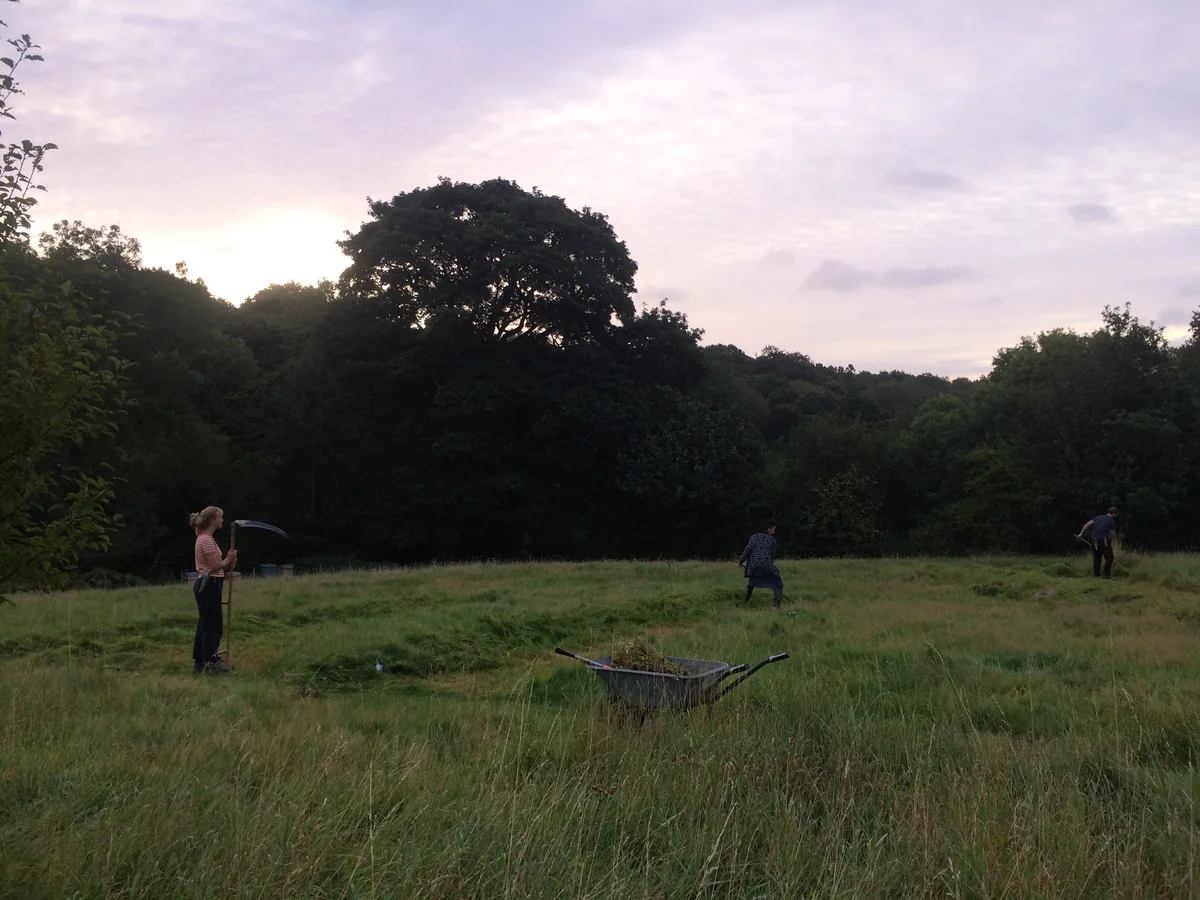

Choose a tool for the actual mowing job
A scythe can be worth learning for selected grass, meadow, edge, or brush work, but it is not a universal replacement for every powered mower or hand tool. Consider the vegetation, ground hazards, size of the job, condition of the site, physical comfort, available instruction, and desired finish. A lawn finish, a meadow cut, and selective brush removal are different jobs.
Compare a supervised scythe trial with an appropriate powered tool, loppers, or a hired service. The purchase price alone does not establish the total effort. Include edge care, clearing obstacles, moving cut material, storage, and the skills needed to keep the tool performing.
Use the correct blade and its own instructions
Scythe designs and maintenance methods differ. Identify the blade and handle system you actually own and follow its maker’s instructions. This guide’s technical sources concern Scythe Supply’s European-style equipment; do not apply their assembly or peening method to an unidentified or different tool.
A grass blade and a brush-oriented blade serve different vegetation. Scythe Supply describes its bush blades as shorter, heavier tools for woody plants and notes that they are less efficient for grass than a grass blade. For vegetation beyond a blade’s intended job, choose a suitable cutting tool rather than forcing the scythe through it.
Fit the tool before committing to permanent assembly
A comfortable fit lets the blade follow the intended mowing position without forcing an awkward posture. Check grip position, blade mounting, and adjustment using the actual instructions and, ideally, a capable instructor. Inspect the fittings for secure assembly before use.
For its own handle system, the manufacturer advises a trial fit and practice movement before final assembly. Use that principle to resolve fit while adjustments are still reversible. A borrowed scythe fitted to another person may tell you little about whether a correctly fitted tool suits your work. Stop if fit creates strain or unreliable control.
Inspect the work area and isolate the cutting arc
Walk the small trial area and remove or mark hidden wire, stones, branches, debris, and other obstacles. Keep children, pets, and bystanders away from the working area and the blade’s full movement. Wear suitable footwear and follow the tool’s protective-equipment guidance.
Scythe Supply recommends gloves when sharpening and covered-blade storage. Treat an unmounted blade as a sharp tool too. Carry, adjust, clean, hone, and store it deliberately, with other people excluded from the hazard. A slow learning session still needs the same attention to the blade as productive mowing.
Learn a controlled slicing movement
Begin in a small obstacle-free patch with an instructor where possible. For the cited equipment, the manufacturer describes a low, controlled slicing arc using body movement rather than axe-like blows. Take a modest bite and stop if the blade needs forcing, snags, or is no longer cutting cleanly.
Work in short sessions, checking fit, fittings, and the edge. Leave enough room to handle the cut material safely. The first goal is a repeatable comfortable movement, not speed or a large cleared area. Ask for help diagnosing resistance instead of answering every problem with harder swings.
Distinguish honing from peening
Honing refreshes the cutting edge with the suitable stone and technique. On the cited European-style blades, peening reshapes the metal near the edge; honing is still needed afterward. The manufacturer warns that excessive peening can leave a thin, wavy, vulnerable edge.
Learn maintenance on your actual blade using the correct equipment and instruction. Do not copy a hammering method onto an unknown blade or attempt a damaged-edge repair beyond your competence. If a crack, deformation, loose mounting, or other damage appears, stop and obtain appropriate repair or replacement advice before mowing again.
Use a small trial to measure the whole task
For an illustrative learning exercise, mark a safe 10-by-10-foot patch: 100 square feet. Record preparation, cutting, honing or adjustment, moving cut material, and cleanup separately. Repeat only after comfortable safe operation. The dimensions define the measurement exercise; they are not a performance standard or recommended cutting arc.
Use the results to compare methods on similar vegetation and ground. If cutting is quick but carrying material dominates the task, a different collection routine may matter more than a longer blade. If the trial is tiring or awkward, seek fit and technique advice before making the project larger.
FAQs and recurring learning mistakes
Does a scythe require great strength? Fit, edge condition, vegetation, and technique affect the effort; test a suitable tool before drawing conclusions. Can it clear all brush? Respect the actual blade’s intended use and choose loppers, saws, or other appropriate tools for unsuitable material.
How often should I sharpen? Follow the equipment guidance and observed cutting condition rather than a universal clock. Avoid working with a loose or damaged blade, striking vegetation like an axe, assuming every design needs peening, skipping inspection for hidden obstacles, or judging the entire method from an ill-fitting borrowed tool. A useful scythe routine is deliberate, maintainable, and matched to the job.
Sources & further reading
Official guidance and original source material used for the factual points in this guide. Planning examples and worksheets are our own illustrations.
- Scythe Supply: Instructions for its European-style scythes
- Scythe Supply: Tips, fit, mowing, and safety
- Scythe Supply: Using a bush scythe
Checked 8 October 2026. Location-specific rules, availability and product specifications can change. Suggest a correction.