
Sources checked
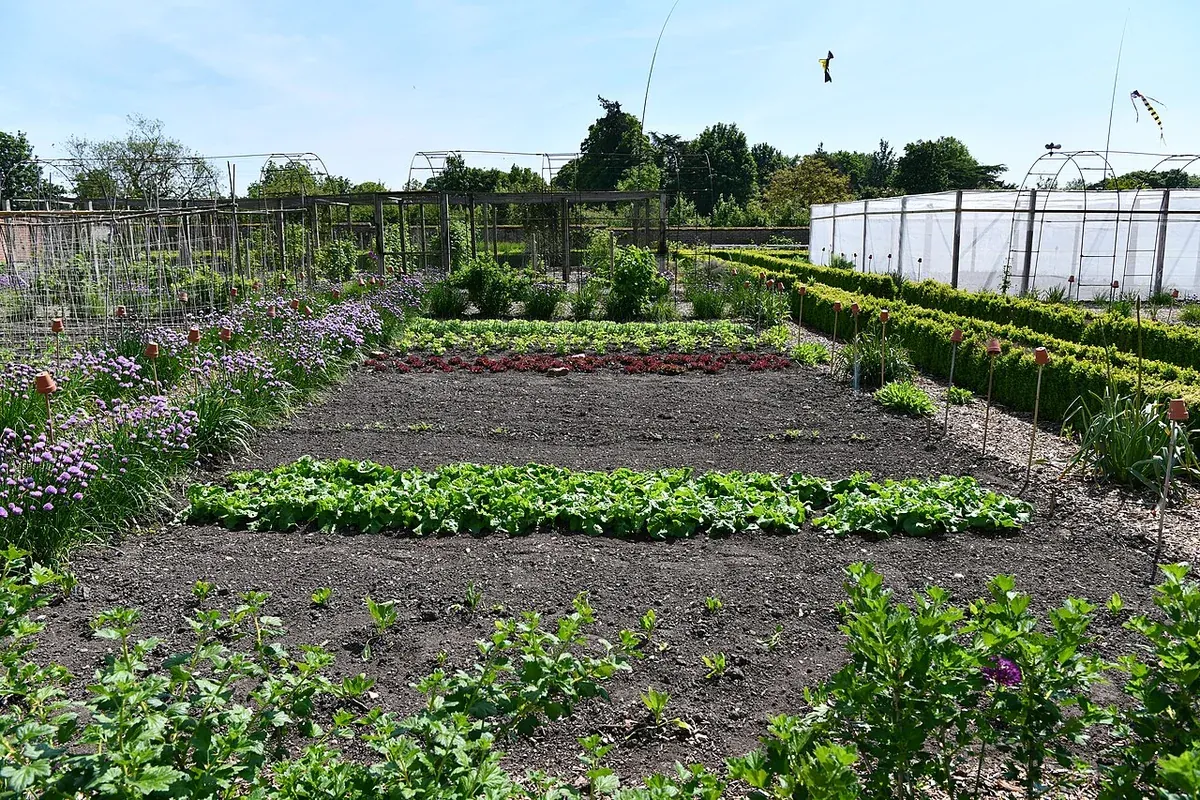

Timing and spacing solve different problems
Timing puts a crop into suitable weather; spacing gives its mature plants enough room and access. Both need crop-specific information. Keep the packet or transplant label, note the variety and obtain a local planting guide. USDA hardiness zones alone cannot set dates for annual vegetables. Check frost risk, soil conditions, expected heat and the remaining growing period before sowing.
Distinguish spacing between plants from spacing between rows. Row spacing may account for equipment or access as well as plant size. A dense bed layout can use space differently from field rows, but that does not justify ignoring airflow, light or the crop’s mature canopy.
Read the instructions in the right order
| Instruction | Question to answer | Common misunderstanding |
|---|---|---|
| Sowing method | Direct sow or grow a transplant? | Starting every crop indoors regardless of root sensitivity. |
| Sowing depth | What does this crop and packet specify? | Using one depth for all seed sizes. |
| Final plant spacing | How far apart should surviving plants stand? | Leaving every germinated seedling. |
| Maturity period | Does the number start at sowing or transplanting? | Counting indoor growing time as though it were already included. |
| Growth habit | Does the variety climb, sprawl or need support? | Mapping the tiny transplant instead of the mature plant. |
Calculate planting positions with margins
Imagine a 4-by-8-foot bed and a hypothetical crop whose instructions allow a 12-inch grid. With planting centers half a spacing from the edges, you can sketch four rows of eight positions: 32 plants. That is a geometric example, not a recommendation to grow 32 of any particular crop. Include supports, access, neighbors and the selected variety’s needs before using the count.
If the packet instead specifies wider spacing, recalculate. Do not multiply by the nominal area while forgetting the mature plants at the edge. A path is not spare planting space if you need it to reach the crop. For larger sprawling plants, a few well-positioned plants may use the whole bed.
Space for change through the season
Draw the early, midseason and later crop maps separately. A quick radish row can use an area before a larger plant fills it, but only if you remove the radishes on time. If an early crop remains too long, the overlap becomes competition. Use harvest stage and duration as part of the schedule.
Place supports where their shade will be intentional. In many midlatitude Northern Hemisphere gardens, tall crops are placed toward the north side to reduce shading; Southern Hemisphere gardens often reverse that logic. Buildings, slopes and actual sun paths can override the simple rule, so observe your site.
Plant and thin accurately
Mark rows with a line or a simple spacing stick. Sow at the packet’s depth, firm gently and water without washing away the seed. For transplants, handle roots carefully and follow crop-specific planting depth; not every vegetable should be buried like a tomato. Keep the root ball moist during establishment.
- Label each row with crop, variety and date.
- Mark the intended final spacing before thinning.
- Thin early enough to reduce competition.
- Keep a small replacement plan if emergence is uneven.
- Measure actual spacing after plants begin filling the bed.
- Check that every plant can be reached for inspection and harvest.
A fall timing example
For an illustrative direct-sown crop rated at 55 days, a local cold-risk date of September 30 and a 14-day planning margin, count backward 69 days to about July 23. The buffer is not universal. A transplant crop requires a different calculation if its maturity figure begins after transplanting. Local daylight, cold tolerance, heat during establishment and harvest stage must be considered.
Write both the calculated date and the source of the local window on the map. Update the plan when forecasts or actual bed conditions make the first date unsuitable.
Spacing mistakes and questions
Can I plant more closely to get more food? Sometimes a carefully managed system allows different spacing, but crowding can reduce useful harvest and increase work. Start with crop guidance. Can I use one spacing for all tomatoes? No; growth habit and support system matter. Are packet dates exact? They are guidance under suitable conditions. Record emergence and harvest to improve your next plan.
Sources & further reading
Official guidance and original source material used for the factual points in this guide. Planning examples and worksheets are our own illustrations.
- University of Maryland Extension: When to Plant Vegetables
- University of Minnesota Extension: Planting the vegetable garden
- University of Maryland Extension: Vegetable Succession and Companion Planting
- University of Maryland Extension: How to Start a Vegetable Garden
Checked 8 October 2026. Location-specific rules, availability and product specifications can change. Suggest a correction.