
Sources checked

Start with the local growing window
A fall garden needs enough time for the chosen crop to establish and reach the intended harvest stage. Lower temperatures and shorter days can slow growth. Use local extension guidance, the variety’s maturity information and the relevant frost or harvest window rather than assuming a summer maturity label gives a precise autumn date.
Fall timing differs across climates and hemispheres. Some areas have a mild winter production season, while others have a short late-season window. Keep the site’s light, soil moisture, heat during establishment and expected protection work visible.
Compare the protection task
| Need | Approach to investigate | Maintenance |
|---|---|---|
| Summer establishment heat | Suitable shade or timing adjustment | Water and temperature observation |
| Insect exclusion | Appropriate mesh or row-cover method | Edges, inspection and crop pollination needs |
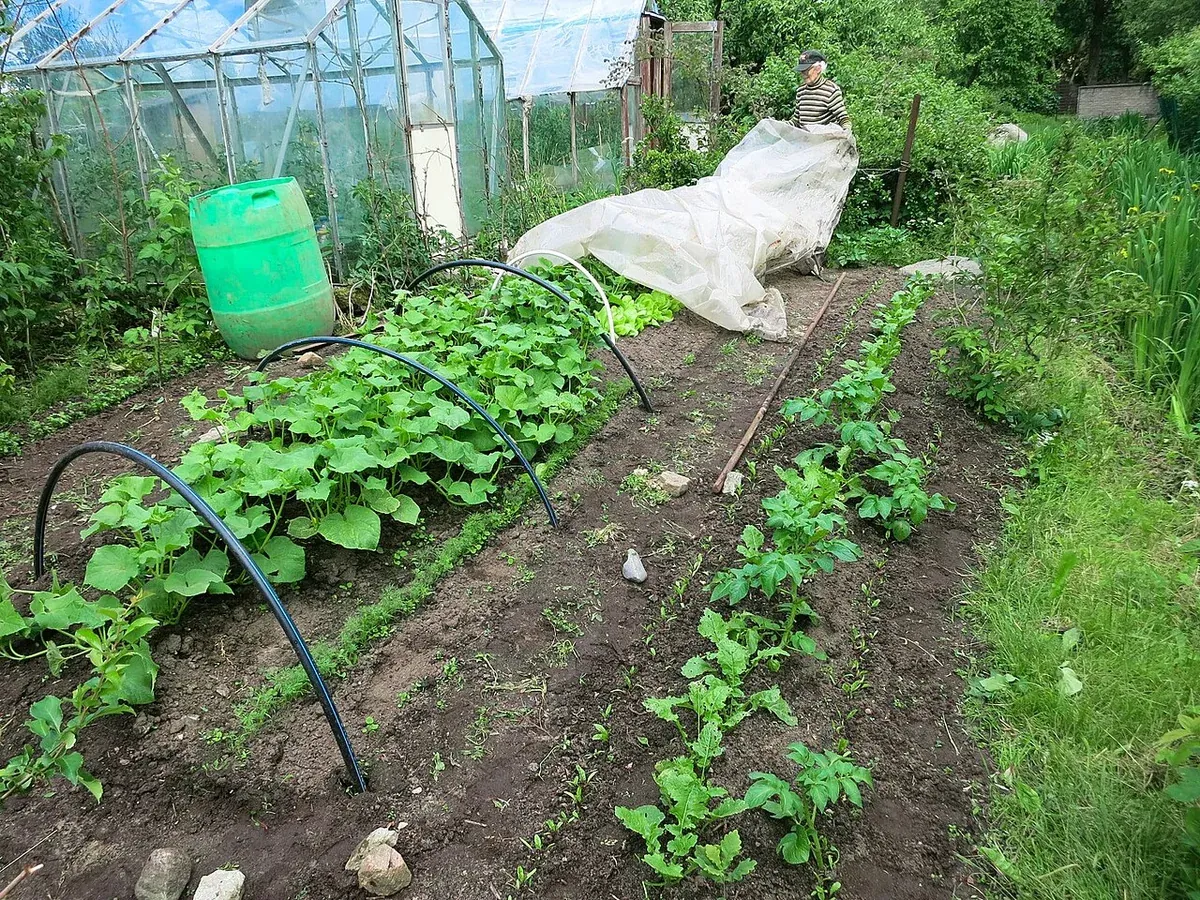
| Cold protection | Suitable cover with realistic expectations | Anchoring, weather checks and ventilation |
| A longer harvest | Locally suitable crops and sowing schedule | Harvest maturity and changing daylength |
| Winter soil protection | An appropriate mulch or cover-crop plan | Timing and future bed preparation |
A cover is not a guarantee against every frost or weather condition. Use the specific product and local guidance, and inspect the conditions beneath it.
Use a backwards-date example
A planning scenario uses a target harvest date of 15 October, a 55-day maturity figure and an additional 14-day allowance. Subtracting 69 days gives 7 August as a scenario sowing date. The buffer is an example assumption, not a universal rule; check the actual crop, transplant basis and local conditions.
Use the date worksheet to change those inputs. Make room for seedling establishment and the time needed to maintain protection.
Match the plan to the household
Choose crops you can harvest and use during the relevant window. Inspect covers, water as needed and record the result. If protection creates more work than you can maintain, reduce the scope or use another suitable crop.
Read fall crop choices and the linked Maryland guidance for its regional examples. Translate the method to your local climate rather than copying a month or date without context.
Sources & further reading
Official guidance and original source material used for the factual points in this guide. Planning examples and worksheets are our own illustrations.
- University of Maryland Extension: When to Plant Vegetables
- University of Maryland Extension: Vegetable Succession and Companion Planting
- University of Florida IFAS Extension: Florida Vegetable Gardening Guide
- University of Minnesota Extension: Planting the vegetable garden
- University of Maryland Extension: Fall Vegetable Gardening
- University of Maryland Extension: Vegetable Garden Weather and Pest Protection
Checked 8 October 2026. Location-specific rules, availability and product specifications can change. Suggest a correction.