
Sources checked
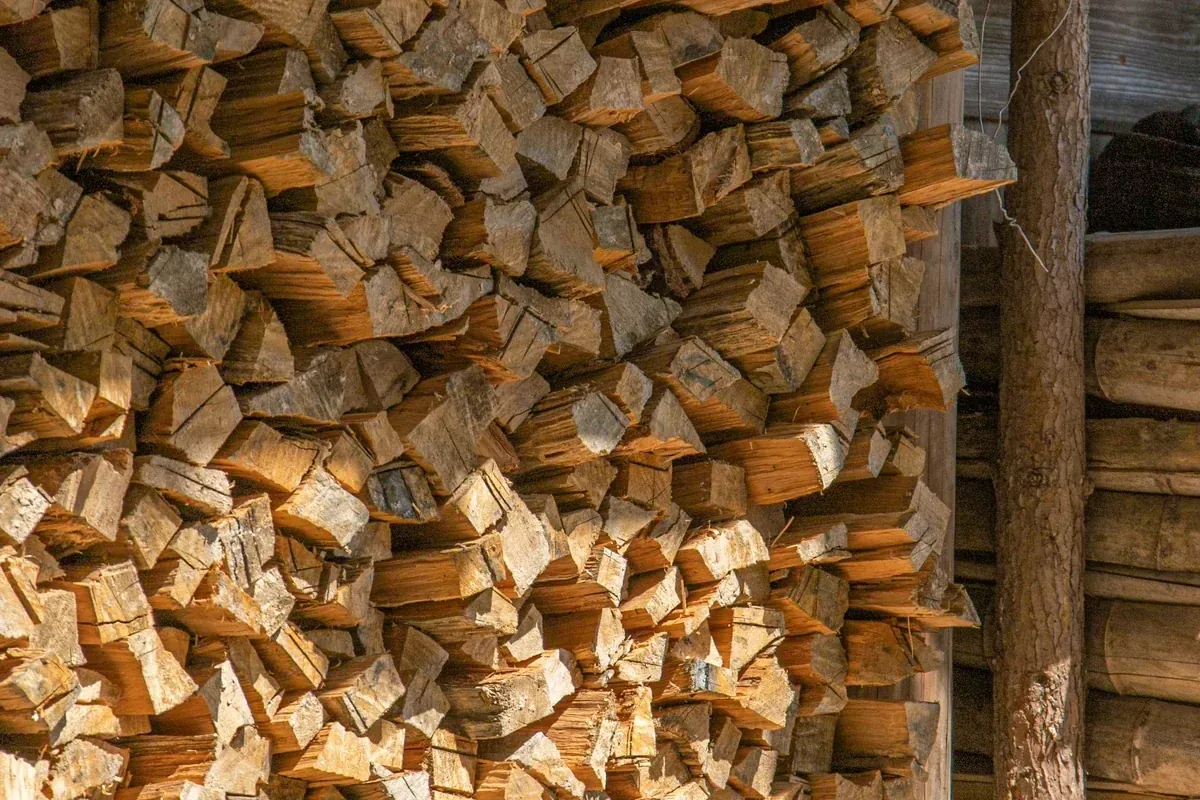
A cord measures volume, not a fixed weight
A full cord of stacked firewood is 128 cubic feet. The weight of that volume depends on wood species, moisture content and the way the stack is composed. Freshly cut and seasoned wood can have very different mass. Without those details, a single pounds-per-cord number is a poor basis for vehicle loading or structural storage decisions.
Ask the supplier what quantity is being sold, which wood is included, its stated condition and how delivery will be documented. A loose load and a neatly stacked measure are not the same geometry. Use a written receipt with quantity, wood type, price and supplier details.
Measure a stack you can verify
| Stack dimensions | Volume | Fraction of a full cord |
|---|---|---|
| 4 ft × 4 ft × 8 ft | 128 cu ft | 1 cord |
| 4 ft × 4 ft × 4 ft | 64 cu ft | 1/2 cord |
| 4 ft × 2 ft × 8 ft | 64 cu ft | 1/2 cord |
| 4 ft × 1.5 ft × 8 ft | 48 cu ft | 3/8 cord |
Multiply stacked length, height and depth in feet, then divide by 128. Measure the actual depth of the pieces; a seller’s “face cord” or “truckload” description may not tell you a standard full-cord quantity. Check the terminology and requirements used by your local weights-and-measures authority.
Use measured mass for transport
A stack measuring 4 × 4 × 4 feet contains 64 cubic feet, or half a full cord by volume. That calculation does not establish its weight. If you plan to carry it, obtain actual mass evidence and compare it with the vehicle and trailer’s applicable ratings and loading instructions.
Account for passengers, tools, containers and other cargo using the same vehicle. Do not assume an advertised tow rating establishes a safe payload in the truck bed. Discuss an uncertain load with the supplier or transporter, or arrange an appropriate delivery rather than relying on a generic average.
Plan the space and handling
Choose storage that keeps the fuel in the condition required by the heating appliance and allows practical access. Consider delivery-vehicle approach, carrying distance, weather and the household’s ability to move the wood. Stacking a large quantity beside a small home can create access or clearance problems.
Record the delivered quantity before using it and save photographs and receipts if the amount is disputed. The wood-stove guide explains how fuel planning fits the heating system. Volume, mass and useful heat are related questions, but each needs its own evidence.
Sources & further reading
Official guidance and original source material used for the factual points in this guide. Planning examples and worksheets are our own illustrations.
- EPA: New Source Performance Standards for residential wood heaters
- EPA: Best wood-burning practices (archived guidance)
- U.S. Fire Administration: Heating fire safety
- U.S. Fire Administration: Carbon monoxide poisoning prevention
- NIST/NCWM: Buying firewood by the cord
Checked 8 October 2026. Location-specific rules, availability and product specifications can change. Suggest a correction.