
Sources checked
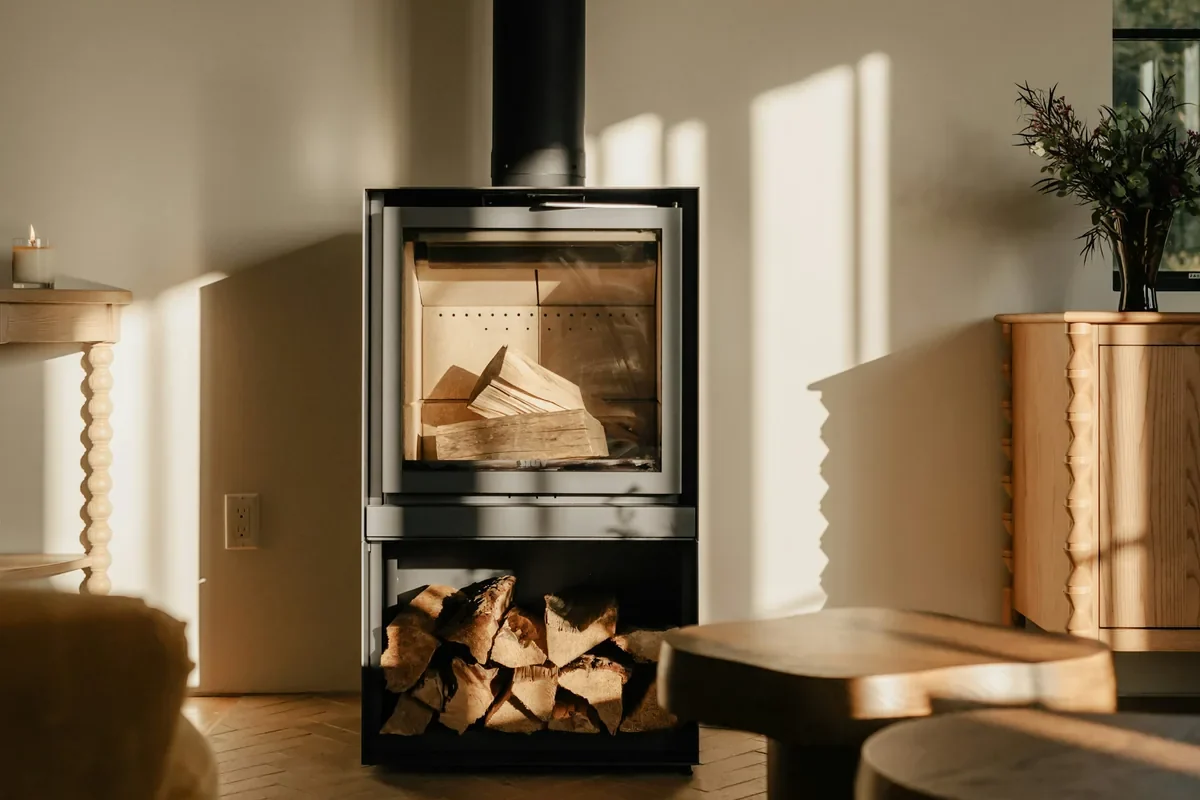
A small home still needs a complete heating design
Wood heat involves combustion, a flue system, clearances, air supply, fuel storage and maintenance. Start with a suitable appliance and an installation designed for the home and accepted locally. Room size alone cannot establish that a stove or flue arrangement is appropriate. Ask the installer how the home’s insulation, ventilation and heat demand affect the choice.
Use the appliance instructions for fuel, controls and operation. Avoid improvising heat shields, altering a flue or reducing clearances based on somebody else’s photograph. General wood-burning guidance complements the instructions; it does not replace the requirements for your installation.
Practical habits to plan
| Habit | Purpose |
|---|---|
| Prepare suitable dry fuel | Support the operating conditions specified for the appliance |
| Keep fuel storage convenient | Reduce difficult daily carrying without compromising required clearances |
| Maintain service access | Allow inspection, cleaning and equipment repair |
| Observe the controls and burn | Notice changes from normal behavior and seek appropriate help |
| Inspect and maintain the chimney system | Follow the installation-specific service schedule |
| Keep smoke and CO protection working | Follow device instructions and applicable requirements |
| Provide an absence plan | Essential heat must continue when the usual operator is unavailable |
Do not burn household waste, treated wood or unsuitable material. Follow the selected stove’s fuel instructions and applicable air-quality requirements.
Match the routine to the household
A home needs modest heat but its occupants are away for much of the day. They compare a correctly sized stove with an alternative heating system and consider tending, backup heat, fuel carrying and maintenance. The appeal of the fire is only one part of that comparison.
Keep a simple log of fuel purchases, servicing and unusual behavior. If the appliance repeatedly overheats the living area or performs poorly, discuss sizing, fuel and installation with the responsible professional instead of creating an unsafe workaround.
Make storage and maintenance visible
Store wood according to local guidance and the appliance requirements, with appropriate separation from ignition sources and building elements. Keep the route from the main stack to the daily supply practical in wet weather. Review ash handling and disposal against the instructions; embers can remain a fire risk.
Budget for inspection, cleaning, replacement parts and fuel handling. A workable stove is one the household can use correctly and maintain through the season. Continue with measuring firewood to compare purchases and plan storage without guessing from a truckload description.
Sources & further reading
Official guidance and original source material used for the factual points in this guide. Planning examples and worksheets are our own illustrations.
- EPA: New Source Performance Standards for residential wood heaters
- EPA: Best wood-burning practices (archived guidance)
- U.S. Fire Administration: Heating fire safety
- U.S. Fire Administration: Carbon monoxide poisoning prevention
- NIST/NCWM: Buying firewood by the cord
Checked 8 October 2026. Location-specific rules, availability and product specifications can change. Suggest a correction.