
Sources checked

Use this month as a local planning prompt
The outdoor examples below describe Northern Hemisphere seasons. Southern Hemisphere gardeners should start with the opposite season, roughly six months away, then use local frost, soil-temperature and rainfall guidance. USDA zones alone cannot set planting dates. Check your forecast, crop instructions and the actual light in your garden before sowing.
Separate indoor starts from outdoor planting
| Situation | Consider | Decision test |
|---|---|---|
| Cold winter with a distant spring | Planning and selected long-lead indoor starts. | Will the seedlings fit the lighted space until planting? |
| Approaching a local cool-season window | Hardened brassica transplants or direct-sown hardy crops. | Is the soil workable and the forecast suitable for that crop? |
| Mild winter or subtropical garden | Follow a local cool-season and warm-season transition calendar. | Will extreme heat arrive before the crop finishes? |
February does not mean tomatoes everywhere. Start with the crop’s recommended weeks before transplanting, count back, and check your local planting date. Onions also require varieties suited to your latitude and day length; buying an unsuitable type cannot be fixed by starting it early.
Set up a practical seed station
Use containers with drainage, labels that remain readable and a clean growing medium. Put lights on a consistent schedule and adjust them to the manufacturer’s recommended distance as plants grow. Keep moisture even rather than leaving cells continually waterlogged. Remove germination covers after emergence and monitor temperature; a heat mat used for sprouting is not an instruction to keep all seedlings hot indefinitely.
Sow a manageable number of cells and leave room to pot up the plants that need it. Keep a record of the sowing date, emergence and transplant goal. If several cells fail, investigate moisture, temperature and seed quality before repeating the same setup.
Work backward: a pepper example
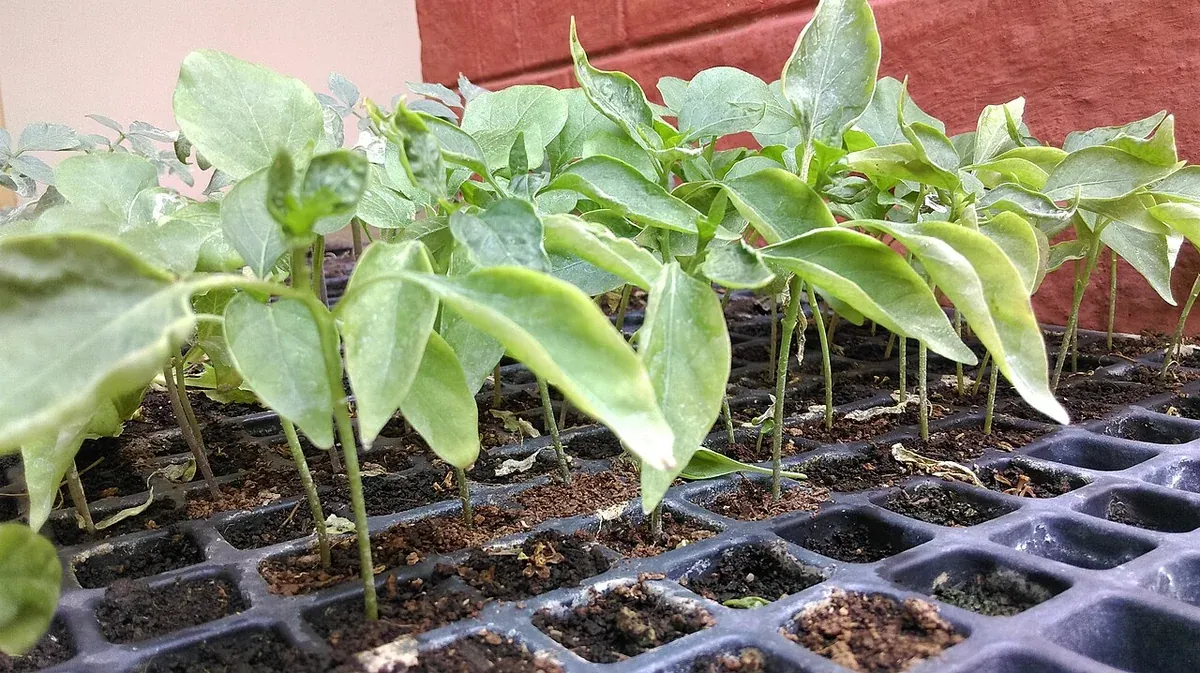
Imagine that a local guide and expected weather put a pepper transplant window near May 20, and your selected variety recommends eight weeks indoors. Counting back 56 days points to March 25, not the start of February. If the packet recommends a longer period, revise the calculation. The important variable is the crop-specific lead time, not a general instruction that peppers belong to February.
For a mild coastal location with a much earlier safe window, the same method could produce a February start. Confirm adequate soil warmth and suitable nights; transplant size alone does not establish outdoor readiness.
Use outdoor time carefully
- Observe where winter water collects before installing beds.
- Clear access routes and repair supports while beds are empty.
- Check available compost and soil-test needs.
- Prepare row-cover materials before a suitable sowing window arrives.
- Keep a small notebook of indoor growing space and the number of cells you can maintain.
Do not dig beds that smear or stick to tools. Avoid crowding more trays beneath a light than it can cover. A smaller batch of strong seedlings is easier to transplant and care for than a large batch that has outgrown its station.
February questions
Are shop seedlings a shortcut? They can be, especially when you lack lighted indoor space; still inspect them and harden them appropriately. Should I sow peas on one fixed date? Use local soil and weather guidance. How do I know a seedling is too early? Repeated potting up, crowding and a distant transplant window suggest that next year’s start should move later.
Sources & further reading
Official guidance and original source material used for the factual points in this guide. Planning examples and worksheets are our own illustrations.
- University of Maryland Extension: Starting Vegetable Seeds Indoors
- University of Minnesota Extension: Planting the vegetable garden
- University of Maryland Extension: When to Plant Vegetables
Checked 8 October 2026. Location-specific rules, availability and product specifications can change. Suggest a correction.